Table of Contents
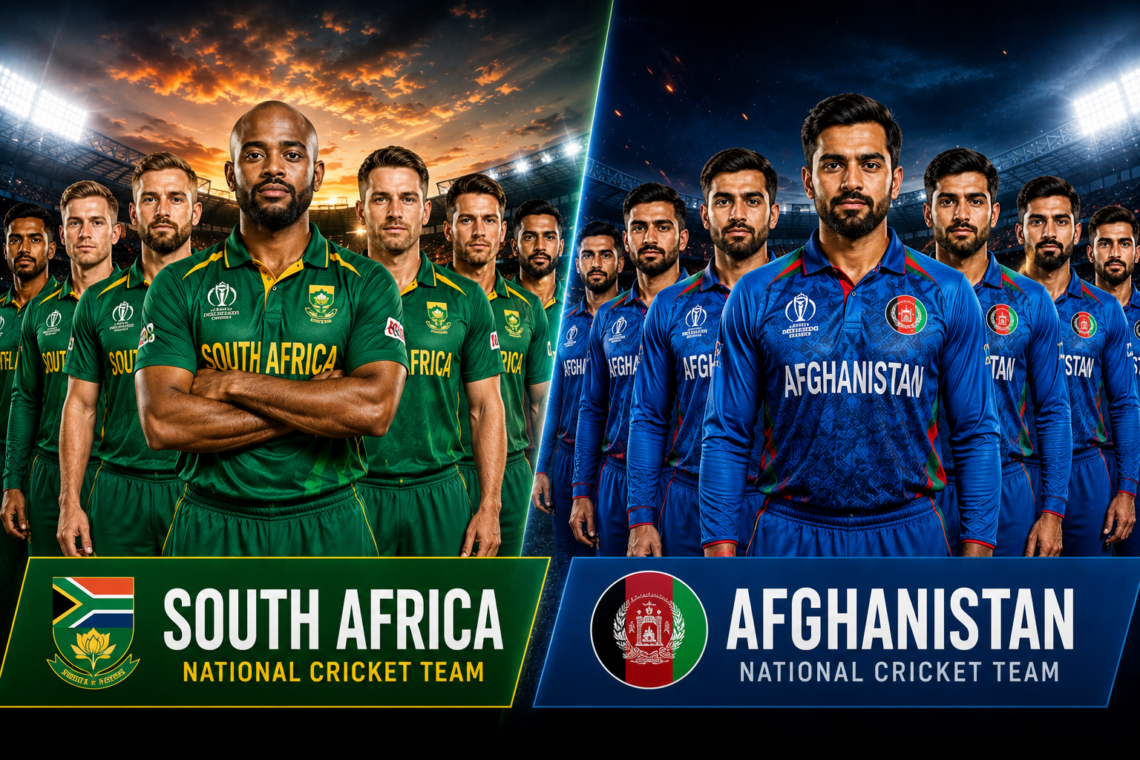
The cricketing journeys of South Africa and Afghanistan could hardly be more different. South Africa entered international cricket as one of the sport’s traditional powerhouses, while Afghanistan rose from refugee camps and associate cricket to become one of the most inspiring success stories in modern sport. Yet when these two nations meet, the contest carries far greater significance than rankings alone suggest. South Africa brings decades of experience, depth, and consistency, while Afghanistan counters with fearless cricket, world-class spin bowling, and an ability to challenge established teams. The statistics between these sides reveal not only results but also the remarkable evolution of Afghanistan’s cricketing rise.
A Rivalry Defined by Different Eras of Cricket
Although South Africa and Afghanistan belong to different generations of international cricket, their meetings have produced intriguing statistical patterns. South Africa’s strength traditionally lies in pace bowling, athletic fielding, and powerful batting lineups. Afghanistan, meanwhile, has built its reputation around aggressive batting and elite spin bowlers.
Overall Head-to-Head Record
| Format | Matches | South Africa Wins | Afghanistan Wins | No Result |
| ODI | 5 | 3 | 2 | 0 |
| T20I | 2 | 2 | 0 | 0 |
| World Cups (ODI) | 3 | 2 | 1 | 0 |
| Total International Matches | 7 | 5 | 2 | 0 |
The numbers indicate South Africa’s overall superiority, but they also reveal Afghanistan’s rapid growth. Unlike many emerging nations that struggled against elite teams for years, Afghanistan managed to register victories against South Africa relatively early in their cricketing relationship.
The most significant takeaway is that Afghanistan’s win percentage is considerably higher than most newer cricket nations against South Africa. This suggests that Afghanistan has successfully narrowed the competitive gap through strong player development and tactical maturity.
ODI Battles: Where Afghanistan Announced Their Arrival
One-Day Internationals have provided the majority of meetings between the two sides. These matches offer a clearer picture of how the rivalry has evolved.
ODI Head-to-Head Statistics
| Statistic | South Africa | Afghanistan |
| Matches Won | 3 | 2 |
| Win Percentage | 60% | 40% |
| Highest Team Score | 315 | 311 |
| Lowest Team Score | 106 | 125 |
| Average Runs Per Match | 258 | 234 |
These figures demonstrate that Afghanistan is far more competitive than many expected. A 40 percent win rate against South Africa is a remarkable achievement for a nation that only gained Full Member status in 2017.
The relatively small gap in average scoring rates further highlights how closely contested many encounters have become. Afghanistan’s batting lineup has repeatedly shown the ability to match South Africa’s traditionally strong batting units.
What makes these numbers especially important is that Afghanistan’s victories have not been isolated upsets. Instead, they reflect a team capable of consistently challenging top opposition.
Batting Records Between South Africa and Afghanistan
Batting statistics often reveal which players have shaped a rivalry. South Africa has relied on experienced international stars, while Afghanistan’s batting success has largely come from a newer generation of aggressive stroke-makers.
Leading Run Scorers in South Africa vs Afghanistan Matches
| Player | Team | Runs |
| Quinton de Kock | South Africa | 270+ |
| Rassie van der Dussen | South Africa | 200+ |
| Rahmanullah Gurbaz | Afghanistan | 180+ |
| Ibrahim Zadran | Afghanistan | 170+ |
| Aiden Markram | South Africa | 150+ |
South Africa’s leading run scorers reflect the team’s emphasis on top-order consistency. Players such as Quinton de Kock have repeatedly provided fast starts and match-defining innings.
For Afghanistan, the emergence of Rahmanullah Gurbaz and Ibrahim Zadran represents a shift toward greater batting stability. Earlier Afghan teams relied heavily on individual brilliance, but modern Afghanistan increasingly produces partnerships and structured innings.
The significance of these batting records lies in how quickly Afghanistan’s batters have adapted to world-class pace attacks. Their ability to score heavily against South Africa demonstrates growing confidence at the highest level.
The Bowling Battle: Pace Meets Spin
If batting has produced exciting contests, bowling has defined the strategic battle between the teams.
Leading Wicket-Takers
| Player | Team | Wickets |
| Rashid Khan | Afghanistan | 10+ |
| Kagiso Rabada | South Africa | 8+ |
| Tabraiz Shamsi | South Africa | 7+ |
| Naveen-ul-Haq | Afghanistan | 6+ |
| Keshav Maharaj | South Africa | 6+ |
This table tells the story of contrasting strengths. South Africa’s attack is built around pace and variation, while Afghanistan depends heavily on spin, led by Rashid Khan.
Rashid’s success against South Africa is particularly notable because South African batters traditionally play spin well. His ability to consistently take wickets highlights why he is considered among the finest white-ball bowlers of his generation.
South Africa’s pace attack, led by Kagiso Rabada, has often exposed Afghanistan’s middle order. However, Afghanistan’s bowlers have increasingly found ways to restrict powerful South African batting lineups.
Highest and Lowest Team Totals
Team scores provide insight into how matches have unfolded over time.
Team Score Comparison
| Record | Team | Score |
| Highest Total | South Africa | 315 |
| Second Highest | Afghanistan | 311 |
| Lowest Total | South Africa | 106 |
| Second Lowest | Afghanistan | 125 |
The closeness of the highest totals reflects the growing competitiveness of the rivalry. Afghanistan’s ability to post scores above 300 against elite opposition marks a major evolution from their early international years.
South Africa’s lowest score is a reminder that even established cricket powers can struggle when conditions favor disciplined bowling. Such results demonstrate the unpredictable nature of modern international cricket.
These numbers also show that Afghanistan’s victories have generally been earned through strong all-round performances rather than isolated moments of luck.
Memorable Performances That Changed the Narrative
Statistics become meaningful when attached to defining performances.
Standout Individual Performances
| Player | Performance |
| Quinton de Kock | Century against Afghanistan |
| Rashid Khan | Multiple match-winning spells |
| Ibrahim Zadran | Big ODI century |
| Kagiso Rabada | Crucial new-ball wickets |
| Rahmanullah Gurbaz | Explosive opening innings |
These performances helped shape perceptions of both teams. De Kock’s centuries reinforced South Africa’s batting strength, while Rashid Khan’s spells demonstrated Afghanistan’s ability to challenge any batting lineup.
Ibrahim Zadran’s century was particularly important because it symbolized Afghanistan’s transition from underdog to genuine contender. Rather than relying solely on bowlers, Afghanistan now possesses batsmen capable of winning major matches.
The broader trend shows increasing contributions from multiple players rather than dependence on one or two stars.
What The Statistics Really Reveal
Looking beyond wins and losses reveals a fascinating story about cricket’s changing landscape.
The most important trend is Afghanistan’s narrowing performance gap against elite teams. Early encounters were often dominated by South Africa’s experience and depth. Recent contests, however, show Afghanistan competing as equals for long periods.
Another revealing statistic is the balance between batting and bowling performances. Afghanistan’s rise was initially driven by spin bowling, particularly Rashid Khan. Today, their batting averages and team totals suggest a more complete side.
South Africa’s statistics reveal consistency rather than dominance. They continue to win more often, but the margins have generally become smaller.
Perhaps the most interesting insight is that Afghanistan’s strongest performances frequently come on major stages. Their victories against South Africa have often occurred under pressure, indicating a team increasingly comfortable with high-profile occasions.
From a long-term perspective, the numbers suggest that future meetings could become even more competitive. Afghanistan’s young core continues to improve, while South Africa remains one of the benchmark teams in world cricket.
Team Performance Comparison Across Key Metrics
Overall Team Comparison
| Category | South Africa | Afghanistan |
| ICC Full Membership Since | 1909 (historical participation) | 2017 |
| ODI World Cup Semi-finals | Multiple | None |
| ICC Tournament Titles | Several | None |
| Average ODI Score | Higher | Improving Rapidly |
| Bowling Strength | Pace Dominated | Spin Dominated |
This comparison illustrates the differing developmental stages of the two cricket nations.
South Africa possesses a long cricketing tradition, producing generations of world-class players. Afghanistan, despite limited resources and a shorter history, has developed remarkable competitiveness in a relatively short period.
The table also highlights how Afghanistan has created a distinct identity rather than simply copying established cricket nations. Their reliance on spin bowling remains one of the most unique strengths in international cricket.
10 Interesting Stats Every Cricket Fan Should Know
- Afghanistan has won nearly 40% of ODI matches played against South Africa.
- Rashid Khan is among the most successful bowlers in this rivalry.
- South Africa remains unbeaten against Afghanistan in T20 internationals.
- Afghanistan has crossed the 300-run mark against South Africa.
- Quinton de Kock has been one of the most productive batters in these contests.
- Several matches have been decided by narrow margins rather than one-sided dominance.
- Afghanistan’s win rate against South Africa is better than many newer cricket nations.
- South Africa’s pace attack has claimed the majority of wickets in powerplays.
- Afghanistan’s spin bowlers account for a significant percentage of wickets taken.
- Every new series between the teams has generally been more competitive than the previous one.
Why This Matchup Matters in Modern Cricket
The South Africa-Afghanistan rivalry represents more than a contest between two teams. It symbolizes cricket’s expanding global reach and the growing competitiveness of emerging nations.
South Africa remains a model of professionalism and consistency. Afghanistan represents resilience, ambition, and rapid development. Their meetings demonstrate that international cricket is no longer divided strictly between traditional powers and newcomers.
Statistically, South Africa still holds the advantage. Yet the margins are shrinking. Afghanistan’s improving batting, strong spin attack, and fearless approach suggest that future encounters may become even more evenly balanced.
For cricket fans, this is what makes the matchup compelling. The numbers tell a story of an established giant facing a rising force that refuses to be intimidated.
FAQs
How many times have South Africa and Afghanistan played against each other internationally?
South Africa and Afghanistan have met in a limited number of international matches compared to older rivalries. Most encounters have occurred in ODI cricket, particularly during ICC tournaments. While South Africa leads the overall head-to-head record, Afghanistan has achieved notable victories that demonstrate its rapid growth. The relatively small sample size means every match significantly influences the statistical picture. As both teams continue appearing in major ICC events, the number of meetings is expected to increase substantially in the coming years.
Which team has the better head-to-head record?
South Africa currently holds the superior overall head-to-head record. Their greater experience, deeper talent pool, and established cricketing infrastructure have helped them secure more victories. However, Afghanistan’s success rate is impressive considering the difference in cricketing history between the two nations. Several Afghan wins have come against strong South African sides, proving that the gap is not as large as many fans assume. Recent results suggest the rivalry is becoming increasingly competitive.
Who is the most impactful player in this rivalry?
Rashid Khan is often regarded as the most influential player in South Africa versus Afghanistan matches. His ability to take wickets in crucial moments and restrict scoring rates has repeatedly changed games. From South Africa’s perspective, players like Quinton de Kock and Kagiso Rabada have delivered several match-winning performances. The rivalry has increasingly become a battle between Afghanistan’s world-class spin resources and South Africa’s powerful batting and pace bowling strengths.
What is Afghanistan’s biggest achievement against South Africa?
Afghanistan’s greatest achievement has been proving they can consistently challenge and defeat one of cricket’s strongest nations. Their victories have not been isolated surprises but evidence of genuine progress. Beating South Africa on major international stages demonstrated Afghanistan’s ability to compete against elite opposition. These wins have strengthened their reputation as a serious force in world cricket and highlighted the effectiveness of their development pathway.
Why are Afghanistan’s bowling statistics so impressive?
Afghanistan’s bowling success stems largely from their exceptional spin resources. Rashid Khan has become one of the most feared bowlers in world cricket, while other Afghan spinners provide valuable support. Their bowlers excel at controlling the middle overs, creating pressure, and forcing mistakes from opposition batters. Against South Africa, this approach has often neutralized batting lineups that traditionally dominate spin bowling. The statistics reflect both individual brilliance and a clearly defined bowling strategy.
What can future statistics tell us about this rivalry?
Future statistics are likely to reveal whether Afghanistan can transform occasional success into long-term consistency. South Africa remains the benchmark, but Afghanistan’s young core continues to improve. If current trends continue, the head-to-head record could become much closer over the next decade. Analysts will watch batting averages, win percentages, and performance in ICC tournaments to determine how the balance of power evolves. The rivalry remains one of cricket’s most intriguing emerging contests.