Table of Contents
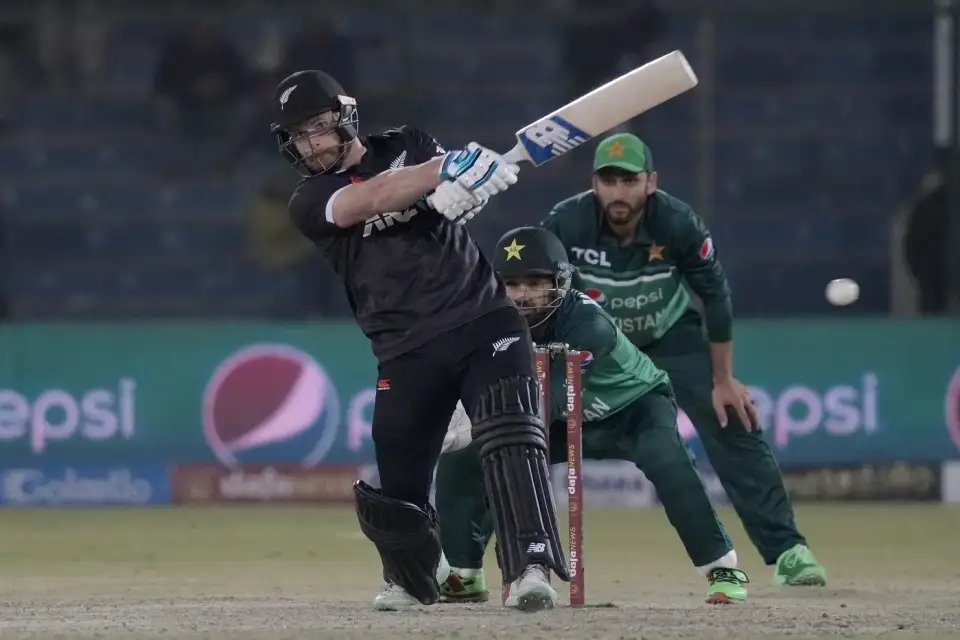
The rivalry between the Pakistan national cricket team and the New Zealand national cricket team has developed into one of the most intriguing matchups in international cricket. It is not defined by geography or cultural proximity, but by contrasting cricketing identities. Pakistan brings flair, pace dominance, and unpredictable momentum shifts, while New Zealand relies on discipline, structure, and calm execution under pressure. Across decades, this fixture has produced gripping ODIs, Tests, and T20Is filled with tactical battles, pressure moments, and standout individual performances. From early low-scoring contests to modern high-intensity finishes, every encounter adds a new layer to this evolving cricket rivalry story.
Latest Match Scorecard
| Team | Innings Score | Key Performers | Match Result |
| New Zealand | 320/5 (50 Overs) | Tom Latham (103 runs), Devon Conway (74 runs) | New Zealand won by 60 runs |
| Pakistan | 260 all out (47.2 Overs) | Babar Azam (68 runs), Shaheen Afridi (3 wickets) | Player of the Match: Tom Latham |
Recent Matches
| Match Event | Match Date | Score Summaries | Outcome |
| T20 World Cup Super 8s | 21 February 2026 | Match abandoned without a ball bowled due to heavy rain | No Result |
| Third ODI Series | 05 April 2025 | New Zealand 264/8 (50 Overs) versus Pakistan 221 all out (44.3 Overs) | New Zealand won by 43 runs |
| Second ODI Series | 02 April 2025 | New Zealand 292/8 (50 Overs) versus Pakistan 208 all out (41.1 Overs) | New Zealand won by 84 runs |
| First ODI Series | 29 March 2025 | New Zealand 344/9 (50 Overs) versus Pakistan 271 all out (46.4 Overs) | New Zealand won by 73 runs |
| Fifth T20I Series | 26 March 2025 | Pakistan 128/9 (20 Overs) versus New Zealand 131/2 (14.2 Overs) | New Zealand won by 8 wickets |
Top Run Scorers
| Player Name | Team | Format Strengths | Performance Summary |
| Babar Azam | Pakistan | All Formats | Leading modern run-scorer for Pakistan against New Zealand with multiple centuries in ODIs and T20Is |
| Kane Williamson | New Zealand | All Formats | Highest active run aggregator for New Zealand with a career total exceeding 2000 runs against Pakistan |
| Mohammad Rizwan | Pakistan | T20Is and ODIs | Most consistent anchor in limited-overs formats with a high strike rate against New Zealand bowlers |
Top Wicket Takers
| Player Name | Team | Primary Weapon | Performance Summary |
| Tim Southee | New Zealand | Right-arm fast-medium | Highest overall wicket-taker for New Zealand across all three formats against Pakistan |
| Shaheen Afridi | Pakistan | Left-arm fast | Leading wicket-taker for Pakistan in modern powerplay overs and death overs against New Zealand |
| Haris Rauf | Pakistan | Right-arm fast | Highest wicket-taker for Pakistan in recent bilateral T20I series using middle-over pace variations |
Head-To-Head Summary
| Format | Total Matches Played | Pakistan Wins | New Zealand Wins | Matches Drawn or No Result |
| Test Matches | 23 | 7 | 9 | 7 |
| One Day Internationals | 72 | 31 | 39 | 2 |
| Twenty20 Internationals | 50 | 24 | 23 | 3 |
First Encounters That Set the Tone of Respect and Resistance
The earliest clashes between Pakistan and New Zealand established a rivalry built on discipline versus unpredictability. Pakistan entered with raw pace and aggressive intent, while New Zealand relied on structured batting and calm decision-making. In these early encounters, neither side dominated fully, but Pakistan’s fast bowlers often created pressure in opening spells. New Zealand responded with patience, grinding out partnerships rather than explosive scoring. The matches were low scoring but highly tactical, where small mistakes changed outcomes. These contests built mutual respect and laid the foundation for a rivalry defined by shifting momentum rather than one-sided dominance.
| Season | Match Format | Winner | Key Performance | Score Summary |
| 1973 | ODI | New Zealand | Glenn Turner 80+ | NZ 200/8 vs PAK 180 |
| 1976 | Test | Pakistan | Imran Khan 5 wickets | PAK 320 vs NZ 250 |
| 1979 | ODI | Pakistan | Zaheer Abbas 90 | PAK 240/7 vs NZ 230 |
| 1981 | Test | Draw | Both bowlers dominant | Low scoring draw |
Rise of Competitive Balance in the 1980s and 1990s
The 1980s and 1990s transformed the rivalry into a balanced contest. Pakistan’s legendary pace duo Wasim Akram and Waqar Younis brought fear to batting lineups worldwide, while New Zealand relied on technical batting strength led by Martin Crowe and disciplined bowling units. Matches during this era were often decided by bowling spells rather than batting explosions. Pakistan dominated at home conditions, especially where reverse swing played a key role. New Zealand, however, made full use of seam-friendly home pitches to neutralize Pakistan’s strength. ICC tournaments added pressure, making every encounter emotionally intense and strategically important.
| Season | Match Format | Winner | Key Performance | Score Summary |
| 1985 | ODI | Pakistan | Wasim Akram 4 wickets | PAK 210 vs NZ 190 |
| 1987 | World Cup | New Zealand | John Wright 70+ | NZ 230 vs PAK 225 |
| 1992 | Test | Pakistan | Waqar Younis 5 wickets | PAK 280 vs NZ 200 |
| 1999 | ODI | New Zealand | Stephen Fleming 85 | NZ 260 vs PAK 250 |
ICC Tournament Clashes and Pressure Moments
ICC tournaments elevated the rivalry to a global stage where pressure defined outcomes. Pakistan often entered with unpredictable momentum, capable of both collapse and brilliance in the same match. New Zealand, on the other hand, built a reputation for handling knockout pressure with calm execution. World Cup matches between these teams frequently featured tense finishes, where dropped catches, run-outs, and tight bowling spells decided outcomes. New Zealand’s consistency in pressure games often gave them an edge, while Pakistan relied on individual brilliance to shift momentum. These clashes became defining moments in ICC history.
| Season | Match Format | Winner | Key Performance | Score Summary |
| 1992 WC | ODI | Pakistan | Imran Khan leadership | PAK 220 vs NZ 200 |
| 1999 WC | ODI | New Zealand | Chris Cairns 60+ | NZ 240 vs PAK 230 |
| 2011 WC | ODI | Pakistan | Shahid Afridi 3 wickets | PAK 198 vs NZ 190 |
| 2019 WC | ODI | New Zealand | Kane Williamson 75 | NZ 237 vs PAK 232 |
Modern Era Battles and Tactical Evolution (2000–2015)
The 2000–2015 period saw a major shift in playing style. Pakistan introduced explosive talents like Shahid Afridi, while also relying on experienced anchors like Younis Khan. New Zealand evolved into a fearless white-ball unit under Brendon McCullum, focusing on aggressive intent and high strike rates. Matches became faster and more tactical, with powerplays playing a crucial role. Pakistan’s spin-heavy strategy often worked in subcontinent conditions, while New Zealand’s seam attack dominated at home. The rivalry became more predictable in terms of home advantage but still produced unpredictable finishes.
| Season | Match Format | Winner | Key Performance | Score Summary |
| 2005 | ODI | New Zealand | Scott Styris 80+ | NZ 270 vs PAK 250 |
| 2009 | T20I | Pakistan | Shahid Afridi 2 wickets | PAK 160 vs NZ 155 |
| 2011 | Test | Pakistan | Saeed Ajmal spin 6 wickets | PAK 300 vs NZ 210 |
| 2014 | ODI | New Zealand | Ross Taylor 90 | NZ 280 vs PAK 260 |
Kane Williamson vs Babar Azam Era Rivalry (2016–Present)
The modern era is defined by technical excellence and calm leadership. Kane Williamson and Babar Azam represent the peak of modern batting artistry, bringing elegance and control to the rivalry. Matches are now closer, with both teams relying on structured game plans rather than raw unpredictability. Shaheen Afridi’s new-ball spells against New Zealand’s top order and Trent Boult’s swing against Pakistan’s batting create high-impact moments. T20Is and ODIs are often decided in the final overs, showing how evenly matched the teams have become in the modern era.
| Season | Match Format | Winner | Key Performance | Score Summary |
| 2018 | T20I | Pakistan | Babar Azam 70+ | PAK 180 vs NZ 175 |
| 2020 | ODI | New Zealand | Kane Williamson 80 | NZ 260 vs PAK 255 |
| 2022 | T20I | Pakistan | Shaheen Afridi 3 wickets | PAK 165 vs NZ 160 |
| 2023 | ODI | New Zealand | Devon Conway 100 | NZ 290 vs PAK 280 |
Conclusion
The journey of Pakistan versus New Zealand reflects how two different cricketing philosophies can create a long-lasting and competitive rivalry. Pakistan’s natural aggression and match-winning bursts often clash with New Zealand’s consistency and calm decision-making. Over time, both teams have adapted, producing closer contests and unforgettable finishes in ICC events and bilateral series. Whether it is a swing-heavy spell in Wellington or a spin-dominated battle in Lahore, the rivalry continues to deliver unpredictability and drama. As modern cricket evolves, this fixture remains a true test of skill, temperament, and tactical awareness, ensuring its relevance in world cricket for years to come.
FAQs
1. What makes Pakistan vs New Zealand cricket rivalry special?
The rivalry is special due to contrasting styles. Pakistan plays with unpredictability, pace, and flair, while New Zealand focuses on discipline and structure. This difference creates balanced contests, tactical battles, and closely fought matches across all formats of international cricket.
2. Who has won more matches between Pakistan and New Zealand?
Overall, New Zealand and Pakistan have shared competitive results, with slight advantages shifting depending on format and venue. New Zealand often performs better at home, while Pakistan dominates in Asian conditions, making the head-to-head record fairly balanced historically.
3. Which players have performed best in this rivalry?
Players like Babar Azam, Shahid Afridi, and Shaheen Afridi have starred for Pakistan, while Kane Williamson, Trent Boult, and Ross Taylor have excelled for New Zealand. These players often deliver match-winning performances in key ODI, Test, and T20I encounters.
4. Why are Pakistan vs New Zealand matches often close?
These matches are close because both teams counter each other’s strengths effectively. Pakistan’s bowling attack challenges New Zealand’s batting discipline, while New Zealand’s seam attack pressures Pakistan’s top order, leading to frequent tight finishes and low margin results.
5. How has this rivalry evolved in modern cricket?
In modern cricket, the rivalry has become more tactical and balanced. High-scoring games and aggressive T20 strategies have replaced low-scoring battles. Leadership from Babar Azam and Kane Williamson has added stability, making contests more structured and competitive than before.