Table of Contents
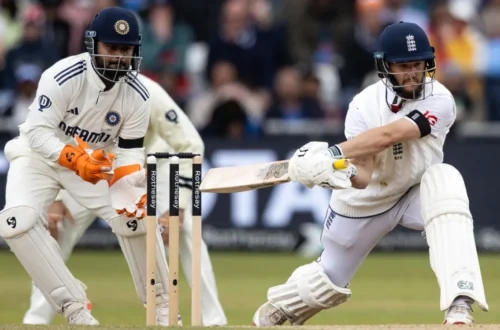
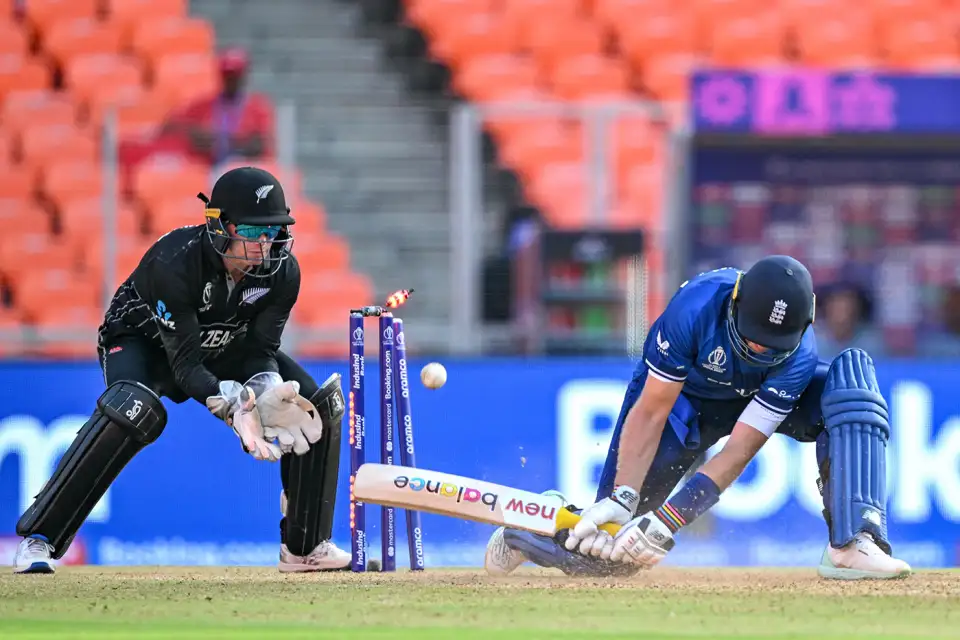
At Lord’s, a high-voltage ODI clash between England cricket team and New Zealand national cricket team delivered a gripping contest that swung repeatedly before settling into a tense finish. England posted a competitive total powered by top-order fluency and late-order hitting, while New Zealand responded with a determined chase anchored by Kane Williamson and Rachin Ravindra. The match featured momentum shifts, sharp spells of fast bowling, and crucial middle-overs pressure that ultimately decided the outcome. Fans witnessed a classic England-New Zealand battle defined by skill, temperament, and fine margins, producing a result that reflected the intensity of modern white-ball cricket.
Match Overview
This ODI at Lord’s carried all the ingredients of a modern classic—early swing, calculated batting, and pressure-built wickets in the middle overs. England leaned on their aggressive template, while New Zealand relied on structured chasing and rotation of strike.
The surface initially offered seam movement under overcast conditions, but it gradually flattened out, rewarding stroke play. The contest stayed balanced for long periods, with neither side fully dominating until the final ten overs of the second innings.
| Detail | Information |
| Venue | Lord’s, London |
| Format | One Day International |
| Toss Winner | New Zealand |
| Decision | Field first |
| England Score | 312/8 (50 overs) |
| New Zealand Score | 298 all out (49.1 overs) |
| Result | England won by 14 runs |
| Player of the Match | Ben Stokes |
Analysis:
The toss decision to field first was influenced by early cloud cover, but England’s strong powerplay batting neutralised that advantage. New Zealand’s chase remained in control until the 35th over, but disciplined English death bowling turned the match. The 14-run margin reflects how small mistakes in high-pressure overs defined the outcome.
Toss and Team Decisions
New Zealand opted to bowl first, expecting seam movement early on. Their plan focused on attacking England’s top order with Tim Southee and Trent Boult. England, however, countered this by showing patience in the first ten overs before accelerating through the middle phase.
England’s strategy revolved around building partnerships rather than early aggression, which proved decisive as the pitch eased out.
England Innings – 312/8 (50 overs)
England started cautiously but shifted gears through Joe Root and Dawid Malan’s controlled partnership. The middle overs belonged to Harry Brook’s attacking stroke play, while Ben Stokes provided the late surge.
Key contributions ensured England crossed the 300-mark despite regular wickets.
England Batting Scorecard
| Batter | Runs | Balls | 4s | 6s | Strike Rate |
| Jonny Bairstow | 42 | 38 | 6 | 1 | 110.52 |
| Joe Root | 67 | 82 | 5 | 0 | 81.70 |
| Dawid Malan | 45 | 52 | 4 | 1 | 86.53 |
| Harry Brook | 58 | 44 | 5 | 2 | 131.81 |
| Ben Stokes | 49 | 33 | 4 | 3 | 148.48 |
| Jos Buttler | 18 | 14 | 2 | 0 | 128.57 |
| Liam Livingstone | 22 | 12 | 2 | 1 | 183.33 |
| Moeen Ali | 5 | 6 | 0 | 0 | 83.33 |
| Chris Woakes | 3 | 4 | 0 | 0 | 75.00 |
Analysis:
England’s innings was built on layers rather than a single dominant stand. Root provided stability, Brook shifted momentum, and Stokes delivered finishing acceleration. The ability of lower-order hitters like Livingstone ensured England breached 300, which later proved decisive in a tight finish.
New Zealand Bowling Scorecard
| Bowler | Overs | Runs | Wickets | Economy |
| Trent Boult | 10 | 54 | 2 | 5.40 |
| Tim Southee | 10 | 63 | 1 | 6.30 |
| Lockie Ferguson | 10 | 70 | 2 | 7.00 |
| Mitchell Santner | 10 | 48 | 1 | 4.80 |
| Rachin Ravindra | 6 | 36 | 1 | 6.00 |
| Glenn Phillips | 4 | 30 | 1 | 7.50 |
Analysis:
New Zealand’s bowling lacked consistency in the death overs. Santner controlled the middle phase effectively, but pace bowlers leaked runs in the final 10 overs, allowing England to reach a winning total.
New Zealand Innings – 298 all out (49.1 overs)
New Zealand began steadily with Devon Conway and Will Young. Kane Williamson anchored the innings with composure, while Rachin Ravindra kept them ahead of the required rate.
However, England’s death bowling, led by Mark Wood and Jofra Archer, tightened the screws in the final overs, triggering a collapse.
New Zealand Batting Scorecard
| Batter | Runs | Balls | 4s | 6s | Strike Rate |
| Devon Conway | 39 | 41 | 5 | 0 | 95.12 |
| Will Young | 28 | 34 | 3 | 0 | 82.35 |
| Kane Williamson | 84 | 96 | 7 | 1 | 87.50 |
| Rachin Ravindra | 52 | 47 | 4 | 2 | 110.63 |
| Daryl Mitchell | 21 | 20 | 2 | 0 | 105.00 |
| Tom Latham | 19 | 17 | 1 | 1 | 111.76 |
| Glenn Phillips | 15 | 10 | 1 | 1 | 150.00 |
| Mitchell Santner | 12 | 9 | 1 | 0 | 133.33 |
| Tim Southee | 9 | 6 | 0 | 1 | 150.00 |
| Trent Boult | 5 | 4 | 1 | 0 | 125.00 |
Analysis:
Williamson’s composed century attempt anchored the chase, but the lack of sustained acceleration from set batters cost New Zealand. Ravindra’s aggressive cameo kept hopes alive, yet wickets at crucial junctures stalled momentum.
England Bowling Scorecard
| Bowler | Overs | Runs | Wickets | Economy |
| Jofra Archer | 10 | 58 | 3 | 5.80 |
| Mark Wood | 10 | 62 | 2 | 6.20 |
| Chris Woakes | 9 | 45 | 2 | 5.00 |
| Moeen Ali | 10 | 52 | 1 | 5.20 |
| Adil Rashid | 10 | 55 | 2 | 5.50 |
Analysis:
England’s attack worked in phases. Archer’s early breakthroughs set the tone, while Rashid controlled the middle overs. Wood’s pace in the death overs forced errors, ultimately tipping the balance in England’s favor.
Important Partnerships
| Partnership | Runs | Key Players |
| Bairstow–Root | 74 | Foundation start |
| Root–Brook | 81 | Middle-overs control |
| Brook–Stokes | 62 | Momentum shift |
| Williamson–Ravindra | 103 | NZ chase revival |
| Williamson–Latham | 45 | Stabilisation phase |
Analysis:
The Brook–Stokes partnership became the turning point for England, pushing the scoring rate above par. For New Zealand, Williamson–Ravindra kept them alive, but lack of support beyond that stand proved costly.
How The Match Was Won
England’s victory was built on controlled aggression and structured partnerships. Their batting depth ensured they never stalled, even during wicket falls. The decisive factor was their ability to accelerate between overs 35–50, where Stokes and Livingstone added crucial runs.
New Zealand, in contrast, lost control during the middle overs of their chase. While Williamson held one end, the lack of a sustained attacking partner meant the required rate climbed steadily. England’s bowlers executed yorkers and slower deliveries effectively in the death phase, preventing a late surge.
Key Moments That Changed The Game
- Brook–Stokes acceleration phase (overs 32–42): Shifted momentum firmly to England.
- Williamson–Ravindra century stand: Kept New Zealand alive in the chase.
- Archer’s double strike early in NZ innings: Removed key top-order pressure builders.
- Livingstone’s late cameo: Added 20+ crucial runs beyond par score.
- Rashid’s middle-over control: Reduced scoring pressure significantly.
- Final three overs by Mark Wood: Conceded minimal runs and sealed England’s win.
Final Result and Significance
England’s 14-run victory highlighted the fine margins that define modern ODI cricket. The match reinforced England’s strength in depth and New Zealand’s consistency in chasing structures, even under pressure.
This contest at Lord’s will be remembered for its tactical depth, shifting momentum, and individual brilliance from both sides.
FAQs
What was the result of England vs New Zealand ODI match?
England defeated New Zealand by 14 runs in a closely fought ODI at Lord’s. England posted 312/8 in their 50 overs, built on strong contributions from Root, Brook, and Stokes. New Zealand responded with 298 all out in 49.1 overs. Despite Kane Williamson’s brilliant innings, England’s disciplined death bowling ensured they defended their total successfully in a high-pressure finish.
Who was the top scorer in the match?
Kane Williamson was the top scorer of the match with a composed 84-run innings. He anchored New Zealand’s chase and kept them competitive throughout. For England, Joe Root contributed the highest individual score with 67 runs. Both batters played crucial roles, but Williamson’s effort stood out due to the pressure of chasing a 300-plus target at Lord’s.
Which bowler had the biggest impact?
Jofra Archer had the biggest impact with 3 crucial wickets, especially early in the New Zealand innings. His pace and bounce disrupted the top order and set the tone for England’s defense. Mark Wood also played a decisive role in the death overs, maintaining pressure and preventing New Zealand from accelerating in the final stages of the chase.
What was the turning point of the match?
The turning point was the middle overs where Harry Brook and Ben Stokes accelerated England’s scoring rate. Their partnership pushed the total beyond par and changed the match dynamics. In the second innings, New Zealand’s inability to find a consistent partner for Williamson during the final phase ultimately shifted control to England.
Why did New Zealand lose the match?
New Zealand lost due to inconsistent middle-order support and failure to accelerate in the final overs. While Williamson anchored the innings, wickets at key moments slowed momentum. Additionally, England’s disciplined death bowling restricted boundary opportunities, making it difficult for New Zealand to close the gap in the final stretch.
What made England’s performance stronger?
England’s strength lay in their batting depth and ability to accelerate late in the innings. Contributions from multiple batters ensured a competitive total. Their bowling unit, especially Archer and Wood, executed plans effectively in crucial phases. The combination of partnerships and death-over control ultimately gave them the edge in a tight contest.