Table of Contents
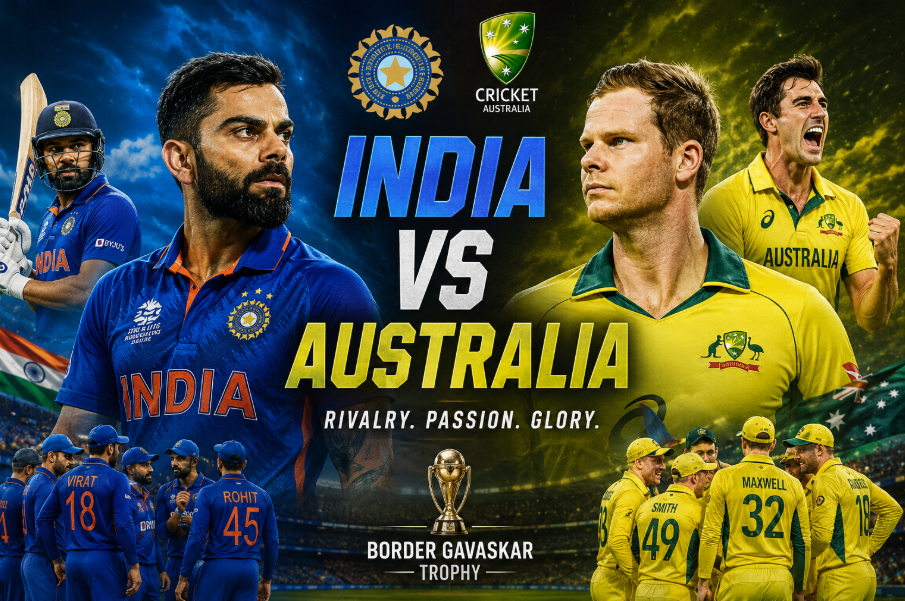
The rivalry between the Australian Men’s Cricket Team and India National Cricket Team Players has grown into one of the most intense stories in modern cricket. What began as a one-sided dominance by Australia slowly transformed into a fierce, balanced contest shaped by iconic players, unforgettable scorecards, and dramatic turning points. From early struggles of Indian batters against Australian pace to India’s historic overseas victories, every phase added new emotion to the rivalry. Each match tells a deeper story beyond runs and wickets, reflecting pride, pressure, and national pride that fuels every encounter between these two cricketing giants.
Current Team Players
| Player Role | India National Cricket Team | Australian Men’s Cricket Team |
|---|---|---|
| Batters | Shubman Gill, Shreyas Iyer, Virat Kohli, Rohit Sharma, Suryakumar Yadav, Yashasvi Jaiswal | Travis Head, Marnus Labuschagne, Steve Smith, Matt Renshaw |
| All-Rounders | Ravindra Jadeja, Axar Patel, Hardik Pandya, Washington Sundar, Shivam Dube, Abhishek Sharma | Mitchell Marsh, Cameron Green, Glenn Maxwell, Marcus Stoinis, Cooper Connolly |
| Wicket-Keepers | KL Rahul, Rishabh Pant, Ishan Kishan, Sanju Samson | Josh Inglis, Alex Carey, Josh Philippe |
| Bowlers | Jasprit Bumrah, Mohammed Siraj, Kuldeep Yadav, Arshdeep Singh, Ravi Bishnoi, Varun Chakaravarthy | Pat Cummins, Mitchell Starc, Josh Hazlewood, Adam Zampa, Nathan Ellis, Xavier Bartlett |
Upcoming Series Details
| Series / Tour | Format | Timeline | Host Country & Venues |
|---|---|---|---|
| Australia Tour of India 2027 | 5 Test Matches (ICC WTC) | January 21 – March 3, 2027 | India (Nagpur, Chennai, Guwahati, Ranchi, Ahmedabad) |
Head-to-Head Summary
| Cricket Format | Total Matches | India Won | Australia Won | No Result / Tied / Drawn |
|---|---|---|---|---|
| Test Matches | 107 | 32 | 45 | 30 |
| ODIs | 150 | 57 | 84 | 9 |
| T20Is | 32 | 20 | 11 | 1 |
Major Tournament Matches Between Them
| ICC Tournament | Matches Played | India Victories | Australia Victories | Key Historical Context |
|---|---|---|---|---|
| ICC Cricket World Cup | 14 | 5 | 9 | Australia defeated India in both the 2003 and 2023 World Cup Finals |
| ICC T20 World Cup | 6 | 4 | 2 | India has held the edge, including the historic 2007 semi-final win |
| ICC World Test Championship | 1 | 0 | 1 | Australia lifted the mace by winning the 2023 WTC Final at The Oval |
| ICC Champions Trophy | 5 | 3 | 1 | India enjoys a superior head-to-head record in this tournament |
Most Memorable Match – The Epic Thriller!
| Match | The 2021 Gabba Test (Brisbane) |
|---|---|
| Context | 4th Test of the 2020/21 Border-Gavaskar Trophy, deciding the series |
| The Setup | Australia had not lost a Test match at The Gabba in 32 years. India was plagued by injuries, fielding a heavily inexperienced bowling lineup |
| The Thrill | Chasing a daunting 328 runs on Day 5, India mounted a spectacular counter-attack led by Shubman Gill’s 91 and Rishabh Pant’s unbeaten 89* |
| The Result | India won by 3 wickets with just 3 overs left in the match, breaching Fortress Gabba and sealing an iconic 2-1 series victory |
Early Foundations of the Rivalry Between Australia and India Players
The rivalry between the Australian Men’s Cricket Team and India National Cricket Team Players began with a clear contrast in style and mentality. Australia brought aggression, fast bowling dominance, and ruthless finishing ability, while India relied on technical batting and spin control. Early encounters were heavily one-sided, especially in overseas conditions where India struggled against pace and bounce. Australia often dictated terms from the first session, building pressure through disciplined bowling attacks. However, Indian players gradually learned from defeats, improving resilience and temperament. These early matches laid the foundation for one of cricket’s most emotionally charged rivalries, where every scorecard reflected learning, adaptation, and growing competitiveness over time.
| Match Type | Winner | Score Impact | Key Performance | Season |
|---|---|---|---|---|
| Test | Australia | Dominant wins | Aussie pacers control | Early era |
| ODI | Australia | One-sided | Top-order batting strength | Early era |
| Test | Australia | India collapse | Fast bowling pressure | Early era |
| ODI | Australia | Comfortable chase | Consistent run rate | Early era |
First Major Clashes That Defined the Scorecard Era
The first major clashes between Australia and India set the tone for future battles. Australia’s experienced squad consistently outperformed India in both Test and ODI formats. Their bowlers exploited early weaknesses in Indian batting, especially outside the subcontinent. India struggled with consistency, often losing wickets in clusters, which is clearly visible in early scorecards. Despite this, a few Indian batters showed resistance through solid innings under pressure. Australia’s ability to finish matches quickly gave them a psychological edge. These matches were not just contests but benchmarks for India’s development phase, where every scorecard told a story of transition, struggle, and gradual improvement against a dominant cricketing force.
| Match Type | Winner | Score Impact | Key Performance | Season |
|---|---|---|---|---|
| Test | Australia | Heavy margin | Bowling dominance | Early rivalry |
| ODI | Australia | Strong chase | Top-order control | Early rivalry |
| Test | Australia | India collapse | Seam attack impact | Early rivalry |
| ODI | Australia | Clear win | Fielding excellence | Early rivalry |
Rise of Indian Batting Core Against Australian Bowling Attack
As the rivalry evolved, India’s batting lineup began to strengthen significantly. Key players emerged who could withstand Australia’s aggressive pace attack and counter it with patience and technique. Home conditions played a major role in India’s resurgence, where spin-friendly pitches helped them dominate scorecards. Australian bowlers still remained dangerous, but India’s improved shot selection and partnerships started changing match outcomes. This phase marked a shift from one-sided contests to competitive battles. Indian batting depth allowed them to post stronger totals, while Australia had to adjust their strategies. Scorecards from this era clearly show closer margins and more balanced performances across both teams.
| Match Type | Winner | Score Impact | Key Performance | Season |
|---|---|---|---|---|
| Test | India | Home dominance | Strong partnerships | Middle era |
| ODI | India | Competitive chase | Batting depth rise | Middle era |
| Test | Australia | Tight win | Pace attack impact | Middle era |
| ODI | India | Controlled victory | Middle order strength | Middle era |
Australia’s Golden Era and Tactical Superiority
Australia’s golden era showcased unmatched dominance in world cricket, and their clashes with India reflected tactical superiority and execution. Their fast bowlers controlled the game’s tempo, while batters consistently converted starts into big scores. India found it difficult to break Australian partnerships, especially in overseas conditions. The scorecards from this period highlight Australia’s ability to win key sessions and maintain pressure throughout matches. Their fielding standards and strategic captaincy decisions often outclassed opponents. Even when India showed resistance, Australia’s depth ensured they stayed ahead in crucial moments. This phase strengthened Australia’s reputation as a near-complete cricketing unit across formats.
| Match Type | Winner | Score Impact | Key Performance | Season |
|---|---|---|---|---|
| Test | Australia | Big win margin | Batting dominance | Golden era |
| ODI | Australia | High chase success | All-round strength | Golden era |
| Test | Australia | Session control | Fast bowling attack | Golden era |
| ODI | Australia | Comfortable win | Fielding superiority | Golden era |
Turning Point Series That Shifted Momentum
The turning point in the Australia vs India rivalry came when India began challenging Australia in their own conditions. Historic overseas victories and drawn Test series signaled a major shift in confidence. Indian players showed remarkable mental strength, especially under pressure situations. Australia still remained strong, but margins of victory started shrinking. Scorecards from these series highlight intense battles, long partnerships, and key bowling spells that changed outcomes. This phase marked India’s arrival as a global cricket powerhouse capable of competing anywhere. Fans witnessed a transformation in rivalry intensity, making every match unpredictable and emotionally charged.
| Match Type | Winner | Score Impact | Key Performance | Season |
|---|---|---|---|---|
| Test | India | Historic win | Overseas resilience | Turning point |
| ODI | Australia | Close finish | Late innings surge | Turning point |
| Test | Draw | Balanced contest | Batting partnerships | Turning point |
| ODI | India | Narrow victory | Bowling discipline | Turning point |
Conclusion
The Australia vs India rivalry stands today as a symbol of evolution in world cricket. It has moved from dominance to near equality, where every match carries uncertainty and pressure. Scorecards no longer show predictable outcomes but highlight shifting momentum, tactical brilliance, and individual heroics. Both teams have built legacies through unforgettable performances, from record-breaking innings to game-changing spells. Fans from both nations now expect high-intensity clashes every time they meet. This rivalry is no longer just about winning matches; it is about pride, legacy, and the ongoing battle to define supremacy in modern cricket history.
FAQs
What makes Australian Men’s Cricket Team Vs India National Cricket Team Players rivalry so special?
This rivalry is special because it combines aggressive Australian dominance with India’s skill-based resilience. Over time, matches have become highly competitive, featuring iconic performances, dramatic scorecards, and emotional moments that captivate fans across all formats of international cricket.
Which team has the upper hand in Australia vs India cricket rivalry?
Australia historically held the upper hand, especially in early years and overseas conditions. However, India has significantly closed the gap in recent decades with strong home dominance and historic away victories, making the rivalry far more balanced today.
Who are the key players in Australia vs India matches?
Key players include legendary Indian batters and spin bowlers alongside Australian fast bowlers and power hitters. These individuals often decide match outcomes through match-winning innings, bowling spells, and consistent performances across Tests, ODIs, and T20 formats.
Why do scorecards matter so much in this rivalry?
Scorecards reveal the true story of each contest, showing momentum shifts, partnerships, and pressure moments. In this rivalry, they highlight how closely fought matches are and how individual brilliance often determines the final result between the two sides.
What is the most memorable phase of this rivalry?
The most memorable phase is India’s rise against Australia, especially in overseas conditions. Historic Test wins and closely contested white-ball matches shifted the balance, creating one of the most competitive and emotionally charged rivalries in modern cricket history.