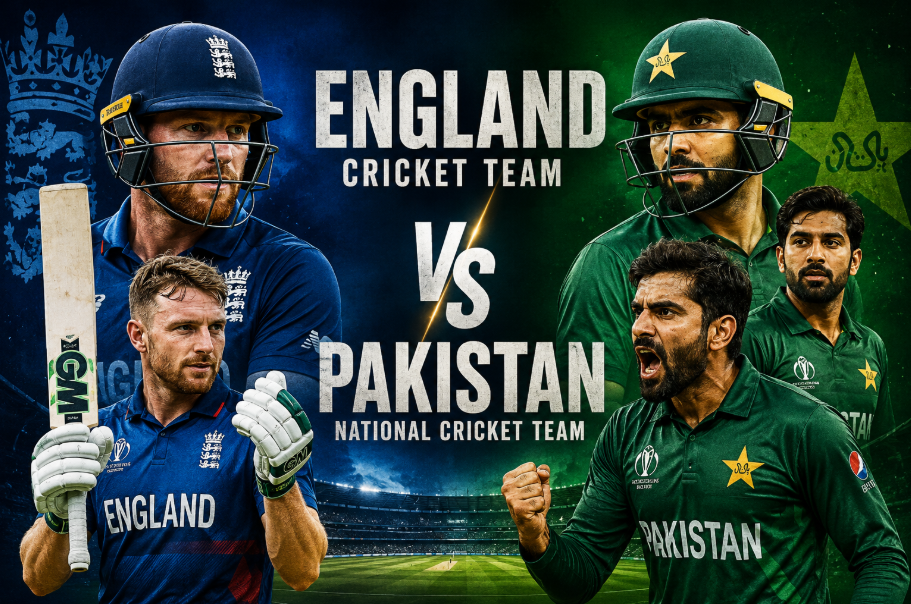
England Cricket Team Vs Pakistan National Cricket Team Match Scorecard
April 21, 2026
6 minutes read
Table of Contents
The cricket rivalry between the England Cricket Team and the Pakistan National Cricket Team is one of the most fascinating contests in international cricket history. It spans more than seven decades, covering eras of dominance, tactical evolution, and unforgettable individual performances. From England’s early control in the 1950s to Pakistan’s rise with world class fast bowling and reverse swing mastery, every phase has reshaped the balance of power. This rivalry is not just about scorecards but about pressure, emotion, and national pride. Each encounter brings unpredictable outcomes, dramatic momentum shifts, and moments that have defined careers and tournaments across generations.
Latest Match Scorecard
Team
Score
Overs
Result
Pakistan
164/9
20
England won by 2 wickets
England
166/8
19.1
Match played on 24 Feb 2026
Recent Matches
Date
Format
Winner
Margin
2026-02-24
T20
England
2 wickets
2024-10-24
Test
Pakistan
9 wickets
2024-10-15
Test
Pakistan
152 runs
2024-10-07
Test
England
Innings and 47 runs
Top Run Scorers (Latest Match)
Player
Team
Runs
Balls
Harry Brook
England
100
51
Sahibzada Farhan
Pakistan
63
45
Top Wicket Takers (Latest Match)
Player
Team
Wickets
Runs Conceded
Shaheen Afridi
Pakistan
4
30
Liam Dawson
England
3
24
Head-to-Head Summary
Format
Total Matches
England Wins
Pakistan Wins
Draws or No Result
Test
92
30
23
39
ODI
92
57
32
3
T20
30
20
9
1
Overall Total
214
107
64
43
All-Time Historical Leaders
Category
Player
Team
Statistic
Top Run Scorer
Alastair Cook
England
1719 Test runs
Top Run Scorer
Inzamam-ul-Haq
Pakistan
1584 Test runs
Top Wicket Takers
Abdul Qadir
Pakistan
82 Test wickets
Top Wicket Takers
James Anderson
England
63 Test wickets
The Early Foundations
The rivalry between England and Pakistan began in 1952 when Pakistan entered Test cricket. England, already an established side, relied on structured batting and disciplined seam bowling, while Pakistan brought raw talent and unpredictability. Early matches were heavily influenced by English conditions, where swing and seam dominated proceedings. Pakistan struggled initially but showed glimpses of brilliance through individual performances that hinted at future competitiveness. These matches were less about rivalry heat and more about learning and adaptation. However, even in early scorecards, Pakistan’s resilience stood out. England often controlled sessions, but Pakistan’s ability to fight back made every encounter meaningful and set the foundation for a long cricketing rivalry.
Match Type
Season
Winner Trend
Key Performance
Overall Impact
Test Series
1952-1960
England dominant
England seam attack control
Foundation phase
Test Series
1961-1970
Mixed results
Pakistan batting resilience
Growing competition
Test Series
1971-1980
Balanced
Spin influence increase
Tactical shift
ODI Matches
1975-1980
England slight edge
Fielding and consistency
Early white-ball rivalry
First Turning Point
The rivalry shifted in the 1970s and 1980s when Pakistan started challenging England more consistently. Home conditions played a massive role, with Pakistan exploiting spin-friendly pitches and reverse swing emerging as a deadly weapon. England still relied on traditional batting technique, but Pakistan’s fast bowlers began changing match dynamics. This era produced unpredictable scorecards with dramatic collapses and match-winning spells. The psychological battle also intensified as Pakistan gained confidence against a more experienced England side. This period marked the true rise of competitiveness, where neither team could assume dominance, and every match became a strategic contest shaped by conditions and momentum swings.
Match Type
Season
Winner Trend
Key Performance
Overall Impact
Test Series
1980-1985
Pakistan rising
Fast bowling dominance
Shift in balance
Test Series
1986-1990
Mixed dominance
Reverse swing emergence
Tactical revolution
ODI Matches
1983-1990
Balanced
Bowling breakthroughs
Competitive era
Test Series
1990-1995
Pakistan strong
Away wins improvement
Psychological shift
Rise of Fast Bowling Era
The 1980s and 1990s became defined by Pakistan’s world class fast bowling attack featuring Wasim Akram and Waqar Younis. Their reverse swing ability created chaos in English batting lineups. England struggled to handle late movement and deadly yorkers, leading to frequent batting collapses. However, England responded with improved defensive techniques and stronger middle order stability. Matches often swung dramatically within sessions, making scorecards unpredictable. This era is remembered for intense competition, aggressive bowling spells, and emotional celebrations. It also marked the transformation of the rivalry into a globally recognized cricket battle where individual brilliance often decided outcomes more than team consistency.
Match Type
Season
Winner Trend
Key Performance
Overall Impact
Test Series
1992-1996
Pakistan strong
Reverse swing dominance
Peak bowling era
ODI Matches
1992 World Cup
Pakistan edge
Pressure batting
Iconic tournament
Test Series
1996-2000
Balanced
Batting improvements
Tactical balance
ODI Series
1999-2000
England slight edge
Middle order stability
Competitive recovery
World Cup Clashes
ICC tournaments elevated the rivalry to a global stage. World Cup matches between England and Pakistan carried immense pressure, where a single mistake could end a campaign. Pakistan’s 1992 World Cup victory under Imran Khan remains a historic highlight, showcasing resilience and strategic brilliance. England’s modern World Cup performances later balanced the rivalry, especially with improved aggressive batting approaches. These matches were not just about runs but about handling pressure under global scrutiny. Scorecards from these games often show dramatic momentum shifts, unexpected collapses, and match-winning partnerships that defined tournament progress.
Match Type
Season
Winner Trend
Key Performance
Overall Impact
World Cup
1992
Pakistan victorious
Captaincy brilliance
Historic win
World Cup
1996-2003
Mixed results
Bowling impact
Tournament swings
World Cup
2011
England strong
Batting depth
Modern dominance
World Cup
2019
England dominant
Power hitting
New era control
Modern Era Evolution
Modern cricket has transformed the rivalry into a high scoring and fast paced contest. England adopted an aggressive white ball strategy focusing on strike rates and deep batting lineups. Pakistan continued relying on pace bowling strength and unpredictable batting brilliance. Matches now frequently cross high totals with explosive finishes. Data analytics, fitness, and tactical planning play a huge role in shaping outcomes. Despite modernization, unpredictability remains a core feature of this rivalry. Scorecards now reflect power hitting, death over strategies, and momentum swings that can change within a few overs. Every match remains uncertain until the final ball.
Match Type
Season
Winner Trend
Key Performance
Overall Impact
ODI Series
2015-2020
England strong
Power batting era
Tactical dominance
T20 Matches
2020-2023
Balanced
Explosive finishes
High scoring games
Test Series
2020-2025
England slight edge
Consistent batting
Strategic control
ICC Events
2022-2025
Mixed results
Fast bowling impact
Unpredictable rivalry
Conclusion
The England vs Pakistan cricket rivalry continues to stand out for its unpredictability, intensity, and rich history. Across Tests, ODIs, and T20s, both teams have exchanged dominance through different eras shaped by conditions, strategy, and individual brilliance. The contest has produced legendary fast bowlers, resilient batters, and unforgettable World Cup moments that remain etched in cricket memory. What makes this rivalry special is its constant evolution, where no result is ever guaranteed despite past records. As modern cricket grows faster and more analytical, the emotional core of this battle remains unchanged. Every new match adds another chapter to a story built on passion, pressure, and cricketing excellence.