Table of Contents
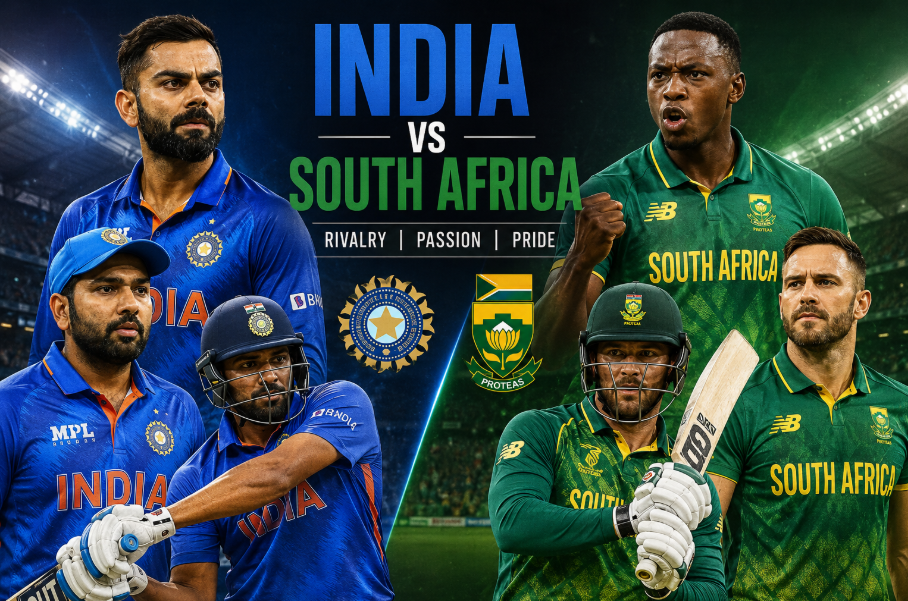
The rivalry between India National Cricket Team Vs South Africa National Cricket Team Players has grown into one of the most respected contests in modern cricket history. It is a story shaped by fast bowling battles, spin duels, and unforgettable pressure moments across formats. From their first meetings in the early 1990s to today’s high-intensity clashes, both teams have pushed each other to evolve constantly. India brought batting depth and spin mastery, while South Africa introduced raw pace, athletic fielding, and aggressive intent. Every match has carried emotional weight, tactical depth, and moments that shifted momentum instantly. This long-form rivalry is not just about wins and losses but about pride, adaptation, and cricketing excellence across generations.
Current Team Players
| Playing Role | India National Cricket Team | South Africa National Cricket Team |
|---|---|---|
| Captains / Batters | Shubman Gill, Suryakumar Yadav, Yashasvi Jaiswal, Devdutt Padikkal, Abhishek Sharma | Temba Bavuma, Aiden Markram, David Miller, Reeza Hendricks, Tristan Stubbs |
| Wicket keepers | Rishabh Pant, Sanju Samson, Ishan Kishan | Quinton de Kock, Heinrich Klaasen, Ryan Rickelton |
| All rounders | Hardik Pandya, Axar Patel, Washington Sundar, Ravindra Jadeja, Shivam Dube | Marco Jansen, Wiaan Mulder, George Linde, Corbin Bosch |
| Bowlers | Jasprit Bumrah, Mohammed Siraj, Arshdeep Singh, Kuldeep Yadav, Varun Chakaravarthy | Kagiso Rabada, Lungi Ngidi, Anrich Nortje, Keshav Maharaj, Kwena Maphaka |
Upcoming Series Details
| Series / Tour | Window | Host Country | Formats Included |
|---|---|---|---|
| India Women tour of South Africa | December 2026 | South Africa | Three ODIs, One Test |
| India Men tour of South Africa | Late 2027 or 2028 | South Africa | Full multi format bilateral series |
Head to Head Summary
| Format | Total Matches Played | India Won | South Africa Won | Tied / No Result |
|---|---|---|---|---|
| Test Matches | 44 | 16 | 18 | 10 |
| One Day Internationals | 91 | 38 | 50 | 3 |
| Twenty20 Internationals | 36 | 21 | 14 | 1 |
Most Memorable Match The Epic Thriller
| Feature | Details of the Historic T20 World Cup Final |
|---|---|
| Tournament and Stage | 2024 ICC Men T20 World Cup Final |
| The Setup | India posted a competitive 176 for 7. South Africa looked set to cruise home with Heinrich Klaasen smashing a rapid half century. |
| The Twist | South Africa required an easy 30 runs from 30 balls with 6 wickets remaining. |
| The Death Bowling | Jasprit Bumrah, Hardik Pandya, and Arshdeep Singh executed a legendary defensive spell, choking the run rate. |
| The Iconic Moment | Suryakumar Yadav took a breathtaking, boundary skirting catch to dismiss David Miller in the final over. |
| Final Result | India won by 7 runs to lift the World Cup trophy in a historic heart stopper. |
Major Tournament Matches Between Them
| Tournament and Year | Format | Match Summary / Result |
|---|---|---|
| 2026 T20 World Cup | T20I | South Africa won by 76 runs |
| 2024 T20 World Cup | T20I | India won by 7 runs to claim the World Cup trophy |
| 2023 ODI World Cup | ODI | India won by 243 runs |
| 2022 T20 World Cup | T20I | South Africa won by 5 wickets in a low scoring Perth thriller |
| 2019 ODI World Cup | ODI | India won by 6 wickets |
Origins of a Fierce Cricket Rivalry Between India and South Africa
The rivalry between India National Cricket Team and South Africa National Cricket Team began with high expectations as South Africa returned to international cricket in the early 1990s. India, already established in world cricket, faced a South African side built on raw pace, athletic fielding, and disciplined tactics. From the very first encounters, the contrast in style was clear. India relied on spin control and batting patience, while South Africa brought relentless fast bowling and aggressive field placements. These early meetings were not just matches but statements of intent. Each innings felt like a test of adaptability and temperament. Players on both sides quickly realized this was not going to be a one-sided contest but a long-term competitive battle shaped by intensity, pride, and evolving cricket philosophies across formats.
Early Rivalry Snapshot Table
| Score | Winning | Performance | Season | Key Info |
|---|---|---|---|---|
| India 190/8 vs SA 192/6 | South Africa | Pace dominance | 1991-92 | First ODI meeting impact |
| SA 220/9 vs India 210/10 | South Africa | Bowling control | 1992-93 | Tight finish under pressure |
| India 245/7 vs SA 230/9 | India | Spin resistance | 1993-94 | India first breakthrough win |
| SA 180/6 vs India 175/9 | South Africa | Fielding strength | 1994-95 | Low scoring tactical battle |
First Clashes and Early Scorecard Battles in the 1990s
The early clashes between India National Cricket Team and South Africa National Cricket Team Players were defined by tight bowling spells and cautious batting approaches. South Africa’s pace attack led by Allan Donald tested Indian batters on bouncy pitches, while India relied heavily on defensive technique and spin control. Sachin Tendulkar emerged as a consistent performer, showing adaptability against high speed bowling. Jacques Kallis and Hansie Cronje played crucial roles in stabilizing South Africa’s batting lineup. Most matches during this era were low scoring and heavily dependent on early wickets. The scorecards often reflected narrow margins, showing how evenly matched both teams were despite contrasting playing conditions and cricketing philosophies.
Early ODI and Test Battles Table
| Season | Score Insight | Winning Pattern | Key Performance | Match Type |
|---|---|---|---|---|
| 1992 | Low totals under pressure | South Africa stronger | Allan Donald pace | ODI |
| 1993 | Defensive batting struggle | India occasional win | Tendulkar resistance | Test |
| 1996 | Tight middle order battles | Balanced outcomes | Kallis stability | ODI |
| 1998 | Bowling dominated games | South Africa edge | Fast bowling attack | Test |
Test Cricket Wars and Grinding Tactical Battles
Test cricket between India National Cricket Team and South Africa National Cricket Team Players became a true examination of patience, skill, and adaptability. Indian conditions favored spinners like Anil Kumble and Harbhajan Singh, who extracted sharp turn and bounce, while South African pitches allowed Dale Steyn and Makhaya Ntini to exploit pace and seam movement. Rahul Dravid’s defensive mastery stood out for India, often anchoring innings under extreme pressure. On the South African side, Hashim Amla and Jacques Kallis provided calm resistance and consistency. Many Test matches ended in draws due to resilient batting from both sides, but decisive sessions often shifted momentum. These contests were less about aggression and more about mental endurance and tactical execution over five days.
Test Match Battle Table
| Season | Score Insight | Winning Pattern | Key Performance | Match Type |
|---|---|---|---|---|
| 2001 | High resistance draw | Even contests | Dravid anchor innings | Test |
| 2004 | Spin vs pace battle | India home advantage | Kumble bowling spell | Test |
| 2008 | Seaming pitch dominance | South Africa edge | Steyn breakthroughs | Test |
| 2010 | Balanced Test series | Draw heavy | Amla consistency | Test |
ICC Tournament Showdowns and Pressure Moments
ICC tournaments added another level of intensity to the rivalry between India National Cricket Team and South Africa National Cricket Team Players. World Cup encounters often carried psychological pressure, especially for South Africa, who struggled with knockout expectations. India, on the other hand, grew into a stronger ICC performer over time. Matches like the 2011 and 2015 World Cup clashes showed how crucial top-order stability and death bowling became under pressure. Players like Virat Kohli and Rohit Sharma delivered impactful innings, while AB de Villiers and Faf du Plessis countered with aggressive stroke play. These matches were often decided in the final overs, where fielding errors or brilliance made the difference between victory and heartbreak.
ICC Tournament Table
| Season | Score Insight | Winning Pattern | Key Performance | Match Type |
|---|---|---|---|---|
| 2003 WC | One sided dominance | South Africa win | Kallis all-round show | ODI WC |
| 2011 WC | High pressure chase | India win | Kohli match control | ODI WC |
| 2015 WC | Semi-final intensity | South Africa win | de Villiers explosion | ODI WC |
| 2019 WC | Strategic dominance | India win | Rohit Sharma century | ODI WC |
The Rise of Modern Superstars and Tactical Evolution
The modern era of India National Cricket Team Vs South Africa National Cricket Team Players saw explosive batting and advanced tactics. Virat Kohli and Rohit Sharma transformed India’s top order with consistency and aggression, while AB de Villiers revolutionized shot-making for South Africa. Kagiso Rabada brought pace and precision, challenging even the best batters in world cricket. Teams began using analytics, match-ups, and strike rate planning to optimize performance. Powerplay aggression increased, and death overs became decisive. The rivalry shifted from survival-based cricket to high scoring encounters. Every match became a tactical chess game involving match-ups, bowling rotations, and aggressive batting strategies designed to exploit even the smallest weakness.
Modern Era Evolution Table
| Season | Score Insight | Winning Pattern | Key Performance | Match Type |
|---|---|---|---|---|
| 2016 | High scoring ODIs | India dominance | Kohli consistency | ODI |
| 2018 | Tactical T20 battles | Balanced wins | Rabada bowling impact | T20 |
| 2021 | Power hitting era | India slight edge | de Kock aggression | ODI |
| 2023 | Data driven cricket | Even contests | Rohit explosive starts | All formats |
Conclusion
The journey of India National Cricket Team Vs South Africa National Cricket Team Players reflects the true essence of competitive international cricket. Over the years, both sides have delivered iconic matches filled with tension, strategy, and individual brilliance. Whether it was India’s spin-driven home dominance or South Africa’s pace-heavy overseas control, neither team ever allowed the other to dominate for long. Legendary players from both nations have shaped unforgettable scorecards and match-winning moments. As modern cricket continues to evolve with T20 power and ODI innovation, this rivalry remains deeply relevant. It stands as a benchmark of balance, respect, and high-quality cricket that continues to inspire fans worldwide.
FAQs
What makes India vs South Africa cricket rivalry so special?
The rivalry is special because both teams bring contrasting strengths. India relies on spin and batting depth, while South Africa uses pace and athletic fielding. These differences create balanced, unpredictable matches filled with high pressure, iconic performances, and memorable scorecards.
Who are the top players in India National Cricket Team Vs South Africa National Cricket Team Players history?
Top players include Sachin Tendulkar, Virat Kohli, and Rohit Sharma for India, while South Africa features Jacques Kallis, AB de Villiers, and Dale Steyn. These legends have consistently shaped match outcomes with match-winning innings, wickets, and all-round performances.
Which team has better head to head record India or South Africa?
The head-to-head record varies by format. South Africa has historically been stronger in Tests due to pace conditions, while India has improved in ODIs and T20s, especially at home, making the rivalry balanced and competitive across eras and conditions.
What are the most memorable matches between India and South Africa?
Memorable matches include World Cup clashes, last over ODI thrillers, and high scoring T20 games. Iconic performances from Kohli, de Villiers, and Rabada stand out, often deciding outcomes in tightly fought contests with dramatic scorecard shifts.
Why is India vs South Africa considered a modern cricket classic rivalry?
It is considered a modern classic because both teams continuously evolve with new strategies and players. The contests feature tactical depth, fast scoring rates, elite bowling attacks, and intense moments that keep fans engaged across all formats and generations.