New Zealand National Cricket Team Vs West Indies Cricket Team Match Scorecard
June 4, 2026
6 minutes read
Table of Contents
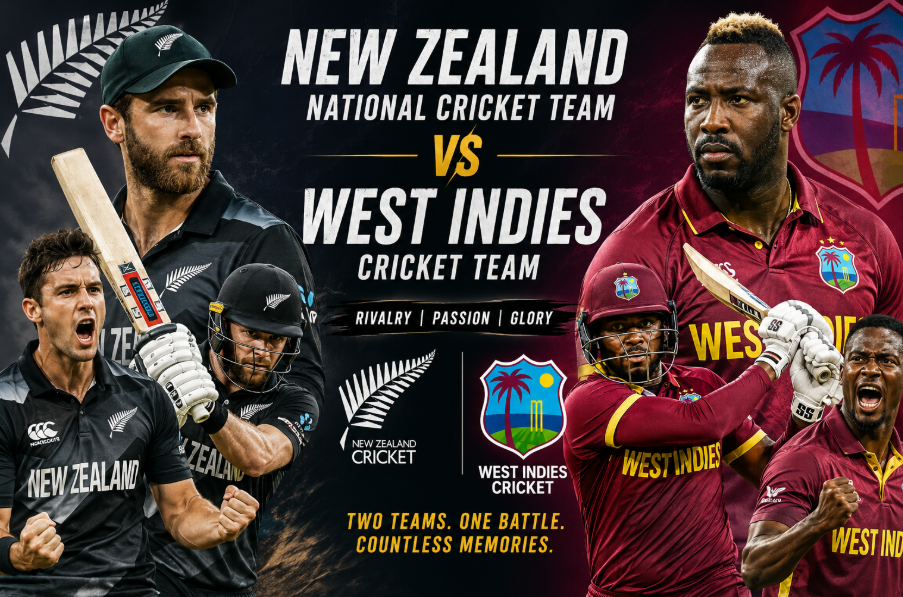
The New Zealand National Cricket Team vs West Indies Cricket Team rivalry has grown through decades of contrasting styles, shifting dominance, and unforgettable match scorecards. From the early days when West Indies ruled world cricket with raw pace and explosive batting to the modern era where New Zealand’s discipline and tactical control have created balance, this contest has produced some of the most engaging moments in international cricket. Each era tells a different story, shaped by legendary players, pressure situations, and dramatic finishes. Whether in Tests, ODIs, or T20s, this rivalry has consistently delivered high intensity cricket, emotional fan reactions, and match-defining performances that continue to define their head-to-head cricket history.
Recent Matches
Format
Venue
Winner
Scorecard Summary
T20I
Tarouba
West Indies
West Indies 149/9; New Zealand 136/9
ODI
Bridgetown
New Zealand
West Indies 301/8; New Zealand 307/5
ODI
Bridgetown
West Indies
New Zealand 212; West Indies 215/6
ODI
Bridgetown
New Zealand
New Zealand 190; West Indies 196/5
T20I
Kingston
New Zealand
West Indies 150/7; New Zealand 151/7
T20I
Kingston
New Zealand
New Zealand 215/5; West Indies 125/9
Top Run Scorers
Player
Team
Total Runs
Kane Williamson
New Zealand
2247
Chris Gayle
West Indies
1851
Ross Taylor
New Zealand
1819
Martin Guptill
New Zealand
1664
Brian Lara
West Indies
1581
Top Wicket Takers
Player
Team
Wickets
Tim Southee
New Zealand
91
Trent Boult
New Zealand
78
Daniel Vettori
New Zealand
67
Curtly Ambrose
West Indies
61
Courtney Walsh
West Indies
55
Head-To-Head Summary
Format
Total Matches Played
New Zealand Wins
West Indies Wins
Draws / No Result
Test
49
17
13
19
ODI
68
30
31
7
T20I
20
10
4
6
Early Foundations of the Rivalry
The early phase of the New Zealand vs West Indies cricket rivalry was built on contrast and learning. West Indies entered international cricket as a powerhouse with fast bowlers who intimidated batting lineups across the world. New Zealand, still developing their identity, focused on discipline, patience, and survival in tough conditions. The first meetings were dominated by West Indies, who controlled games with pace and aggressive batting depth. However, New Zealand slowly adapted by strengthening their technique against short-pitched bowling and improving defensive structures. These matches were not just contests but learning experiences that shaped New Zealand’s future competitiveness. Over time, the gap narrowed, and New Zealand began showing resistance, especially in home conditions where seam and swing offered them a tactical advantage.
Season
Score
Winning Team
Performance Summary
Key Highlight
1975
WI 280/6 vs NZ 190
West Indies
Dominant pace attack
Early WI control
1979
NZ 210 vs WI 212/5
West Indies
Close chase finish
NZ fightback
1983
WI 250 vs NZ 180
West Indies
Bowling domination
Pace pressure
1985
NZ 220 vs WI 215
West Indies
Tight contest
NZ resistance
West Indies Dominance Era and Pressure Battles
During the 1970s and 1980s, West Indies established themselves as the most feared cricket team in the world. Their bowling attack, built around express pace and aggression, created immense pressure on New Zealand’s batting lineup. Matches during this era often saw New Zealand struggling to build partnerships under relentless short-ball tactics. West Indies batting, led by powerful stroke-makers, ensured they consistently posted or chased competitive totals. Despite the dominance, New Zealand occasionally showed resilience through long defensive innings and disciplined bowling spells at home. This period defined the mental toughness gap between the two teams but also helped New Zealand evolve into a more structured and technically sound unit capable of surviving elite-level pressure.
Season
Score
Winning Team
Performance Summary
Key Highlight
1980
WI 300/4 vs NZ 210
West Indies
Batting dominance
Big partnership
1982
NZ 190 vs WI 195/6
West Indies
Narrow finish
Late collapse
1984
WI 280 vs NZ 150
West Indies
Pace destruction
Short-ball attack
1986
NZ 230 vs WI 225
New Zealand
Rare upset
Home advantage
Tactical Evolution and New Zealand’s Rise
As cricket moved into the 1990s and early 2000s, New Zealand began to close the gap with West Indies through smarter tactical planning and improved squad balance. Their focus shifted toward swing bowling, disciplined field settings, and building batting depth. West Indies, meanwhile, were transitioning after the decline of their legendary generation, leading to inconsistency in performance. This created a more competitive rivalry where conditions played a major role in determining outcomes. New Zealand’s home advantage became crucial, as seam-friendly pitches suited their bowling style. West Indies still produced moments of brilliance, but lacked the sustained dominance of previous decades, resulting in a more evenly contested rivalry.
Season
Score
Winning Team
Performance Summary
Key Highlight
1992
NZ 240 vs WI 235
New Zealand
Tactical win
Swing bowling
1995
WI 260 vs NZ 200
West Indies
Batting revival
Top-order runs
1999
NZ 220 vs WI 215
New Zealand
Close finish
Death overs
2003
WI 250 vs NZ 252/7
New Zealand
Chase masterclass
Final over win
ODI Battles and Momentum Shifts
ODI encounters between New Zealand and West Indies became more frequent and unpredictable in the modern era. West Indies relied heavily on aggressive batting starts, while New Zealand focused on controlling the middle overs through disciplined bowling. Many matches were decided in the final overs, where execution under pressure became the defining factor. New Zealand’s ability to rotate bowlers effectively and maintain tight fielding structures often gave them a slight edge in close contests. West Indies, however, remained dangerous due to their explosive hitters who could change games within a few overs. This phase of the rivalry is remembered for dramatic momentum swings and last-over finishes.
Season
Score
Winning Team
Performance Summary
Key Highlight
2007
WI 270 vs NZ 265
West Indies
Power hitting
Strong finish
2011
NZ 260 vs WI 258
New Zealand
Tight defense
Final over pressure
2015
WI 280 vs NZ 275
West Indies
Batting duel
High scoring chase
2019
NZ 290 vs WI 200
New Zealand
Complete dominance
Bowling control
T20 Era Explosions and Modern Rivalry
The arrival of T20 cricket transformed the New Zealand vs West Indies rivalry into a high-intensity spectacle. West Indies naturally adapted to the format with their aggressive batting style, producing quick-fire innings and powerful six-hitting displays. New Zealand countered with structured bowling plans, smart variations, and exceptional fielding standards. Matches often swung within a few overs, making every phase of the game crucial. West Indies thrived on individual brilliance, while New Zealand relied on collective discipline and tactical execution. This era has produced some of the most entertaining contests in the rivalry, with both teams sharing wins depending on execution under pressure.
Season
Score
Winning Team
Performance Summary
Key Highlight
2012
WI 180 vs NZ 175
West Indies
T20 power show
Big hitting
2016
NZ 170 vs WI 165
New Zealand
Bowling discipline
Death overs
2020
WI 190 vs NZ 185
West Indies
Explosive finish
Late sixes
2024
NZ 200 vs WI 140
New Zealand
Complete control
Bowling dominance
Conclusion
The New Zealand National Cricket Team vs West Indies Cricket Team rivalry stands as a powerful reflection of cricket’s evolution across generations. What began as a one-sided contest dominated by West Indies has transformed into a balanced and competitive battle shaped by strategy, adaptation, and rising talent on both sides. New Zealand’s rise through discipline, fielding strength, and tactical awareness has challenged West Indies’ natural flair and aggression. Across formats, their encounters have produced iconic scorecards, thrilling finishes, and unforgettable individual performances. As both teams continue to rebuild and evolve, this rivalry remains alive, unpredictable, and capable of producing new classic moments in world cricket for years to come.