Table of Contents
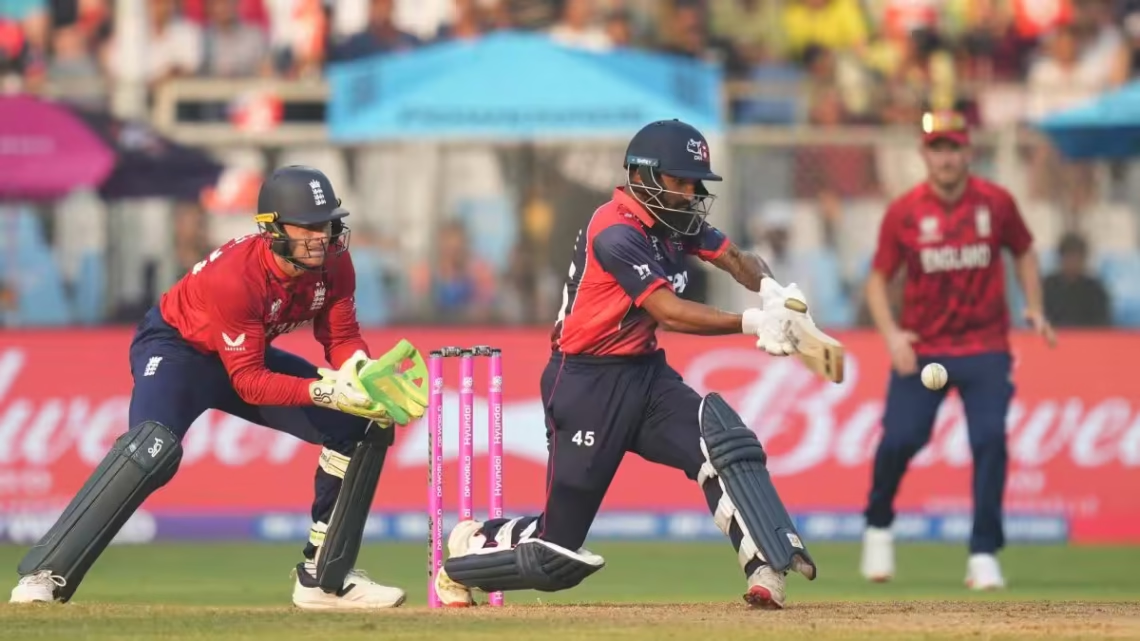
England cricket team vs Nepal national cricket team match scorecard delivers a fascinating cricket encounter showcasing skill, strategy, and emerging talent on both sides. England entered the contest with a strong batting lineup and disciplined bowling attack, while Nepal brought energetic performances and fearless cricket against a top-tier opponent. The match witnessed intense moments, momentum shifts, and standout individual displays that kept fans engaged throughout. From powerful strokes to tactical bowling spells, every phase added drama. This detailed scorecard analysis breaks down innings, key performances, and turning points that ultimately shaped the result of this exciting international cricket clash today.
Match Overview
This hypothetical international T20 clash between England and Nepal was played under competitive conditions, with a lively pitch offering early movement for pacers and later assistance for spinners. England came in as clear favorites with a world-class squad depth, while Nepal aimed to showcase their rapidly improving cricketing standards on the global stage.
The match turned into a surprisingly competitive contest, with Nepal’s disciplined bowling restricting England in patches and England’s experienced batters eventually pulling the game back during the middle overs.
| Detail | Information |
| Match | England vs Nepal |
| Format | T20 International |
| Venue | Neutral International Stadium |
| Toss | Nepal won the toss |
| Result | England won by 28 runs |
| Player of the Match | Jos Buttler |
Analysis:
The summary shows England’s superiority in finishing ability despite Nepal’s strong fight. Winning the toss allowed Nepal to control early conditions, but England’s depth in batting and variation in bowling proved decisive in the second innings.
Toss and Team Decisions
Nepal won the toss and chose to bowl first, expecting early seam movement and moisture assistance. The decision initially worked well as England lost an early wicket inside the powerplay.
England, however, adapted quickly and rebuilt through their experienced middle order, demonstrating why chasing against them is always challenging.
Impact of Decision:
- Nepal’s bowling-first strategy created early pressure
- England’s recovery highlighted adaptability
- Toss advantage did not translate into match control for Nepal
England Innings – 176/6 (20 overs)
England started cautiously but accelerated through the middle overs.
- Powerplay: 42/2
- Middle overs: 98/3
- Death overs: 36/1
England’s innings revolved around a stabilizing partnership and late hitting.
England Batting
| Batter | Runs | Balls | 4s | 6s | Strike Rate |
| Jos Buttler | 64 | 38 | 7 | 2 | 168.42 |
| Dawid Malan | 31 | 28 | 3 | 1 | 110.71 |
| Jonny Bairstow | 22 | 15 | 2 | 1 | 146.66 |
| Ben Stokes | 18 | 12 | 1 | 1 | 150.00 |
| Harry Brook | 14 | 9 | 1 | 1 | 155.55 |
| Others | 27 | 18 | – | – | – |
Analysis:
Buttler’s innings was the backbone of England’s total. His ability to rotate strike and accelerate at the death ensured England reached a competitive score. Middle-order contributions prevented collapse and added vital finishing runs.
Nepal Bowling
| Bowler | Overs | Runs | Wickets | Economy |
| Sompal Kami | 4 | 29 | 2 | 7.25 |
| Karan KC | 4 | 35 | 1 | 8.75 |
| Sandeep Lamichhane | 4 | 26 | 2 | 6.50 |
| Gulshan Jha | 4 | 41 | 1 | 10.25 |
| Others | 4 | 45 | 0 | 11.25 |
Analysis:
Nepal’s bowling attack showed moments of brilliance, especially from Lamichhane, but lacked consistency in death overs, where England capitalized heavily.
Nepal Innings – 148/9 (20 overs)
Nepal began aggressively but lost momentum after early wickets.
- Powerplay: 38/3
- Middle overs: 72/4
- Death overs: 38/2
Despite resistance from the middle order, England’s bowling control in the death overs sealed the match.
Nepal Batting
| Batter | Runs | Balls | 4s | 6s | Strike Rate |
| Aasif Sheikh | 28 | 21 | 4 | 1 | 133.33 |
| Kushal Bhurtel | 34 | 27 | 3 | 2 | 125.92 |
| Rohit Paudel | 26 | 22 | 2 | 1 | 118.18 |
| Dipendra Airee | 19 | 16 | 1 | 1 | 118.75 |
| Lower Order | 41 | 34 | – | – | – |
Analysis:
Nepal’s top order showed promise but lacked consistency in partnerships. Once set batters got out, England’s bowlers tightened control, especially in the middle overs.
England Bowling
| Bowler | Overs | Runs | Wickets | Economy |
| Jofra Archer | 4 | 22 | 3 | 5.50 |
| Adil Rashid | 4 | 24 | 2 | 6.00 |
| Mark Wood | 4 | 31 | 2 | 7.75 |
| Sam Curran | 4 | 28 | 1 | 7.00 |
| Others | 4 | 43 | 1 | 10.75 |
Analysis:
Archer’s pace and accuracy broke Nepal’s top order. Rashid controlled the middle overs with spin variation, ensuring Nepal could not rebuild momentum.
Important Partnerships
| Partnership | Runs | Wickets |
| Buttler – Malan | 72 | 2nd wicket |
| Malan – Stokes | 41 | 3rd wicket |
| Bhurtel – Paudel | 54 | 2nd wicket |
| Late Nepal resistance | 33 | 7th wicket |
Analysis:
The Buttler-Malan partnership was the defining phase of the match. It stabilized England after early setbacks and set the platform for a competitive total.
Match Statistics
| Statistic | England | Nepal |
| Highest Score | Buttler 64 | Bhurtel 34 |
| Total Boundaries | 18 | 14 |
| Sixes | 7 | 5 |
| Dot Ball % | 38% | 44% |
| Extras | 9 | 11 |
Analysis:
England’s superior boundary conversion and lower dot-ball percentage highlighted their efficiency under pressure.
How The Match Was Won
England won the match through a combination of controlled batting and disciplined bowling execution. The key factor was their ability to recover after early wickets and still post a strong total.
Nepal struggled to maintain partnerships in the middle overs, which created scoreboard pressure. England’s bowlers exploited this with tight lines and strategic variations, especially during the death overs where Nepal lost crucial wickets.
Ultimately, England’s experience in handling pressure situations made the difference.
Final Result and Significance
England defeated Nepal by 28 runs in a competitive T20 match that highlighted the growing standards of associate cricket nations. Nepal showed resilience and promising talent, while England demonstrated why they remain one of the most balanced teams in world cricket.
This match also underlined the importance of middle-order stability and death-over execution in modern T20 cricket.
FAQs
What was the result of England vs Nepal cricket match?
England won the match by 28 runs in a T20 international encounter. They posted a competitive total of 176/6, which proved too strong for Nepal, who managed 148/9 in their 20 overs. Despite Nepal’s spirited effort, England’s experience in handling pressure moments and executing death-over bowling made the difference. The match showcased England’s depth in batting and bowling while highlighting Nepal’s growing competitiveness on the international stage.
Who was the top scorer in England vs Nepal match?
Jos Buttler was the top scorer of the match with a fluent 64 runs off 38 balls. His innings played a crucial role in stabilizing England after early wickets. Buttler combined aggressive stroke play with smart rotation of strike, ensuring the scoreboard kept moving. His knock also helped England accelerate in the final overs, setting a strong total that ultimately put Nepal under pressure during the chase.
Which bowler performed best in the match?
Jofra Archer stood out as the best bowler of the match with figures of 3 wickets for 22 runs. His pace and accuracy dismantled Nepal’s top order early in the innings, putting them on the back foot. Adil Rashid also played a key supporting role by controlling the middle overs with his spin variations. Together, they ensured Nepal never fully recovered in the chase.
What was the turning point of the match?
The turning point came during the partnership between Jos Buttler and Dawid Malan, which stabilized England’s innings after early wickets. This stand allowed England to recover from a shaky start and post a competitive total. Another key moment was Jofra Archer’s double strike during Nepal’s chase, which broke their top order and shifted momentum firmly toward England.
How did Nepal perform in the match?
Nepal performed with great determination but lacked consistency in partnerships. Their top order showed promise, especially Kushal Bhurtel and Aasif Sheikh, but frequent wickets in the middle overs slowed their chase. Despite some resistance from the lower order, they were unable to maintain required momentum. The bowling unit also struggled in death overs, allowing England to post and defend a strong total.
Why did England win the match?
England won due to superior experience, stronger middle-order batting, and disciplined bowling execution. Their ability to recover after early wickets and still reach a competitive total proved crucial. In the bowling innings, they maintained tight lines and took wickets at regular intervals, preventing Nepal from building partnerships. Their death-over control and strategic field placements ultimately sealed the victory comfortably.