Table of Contents
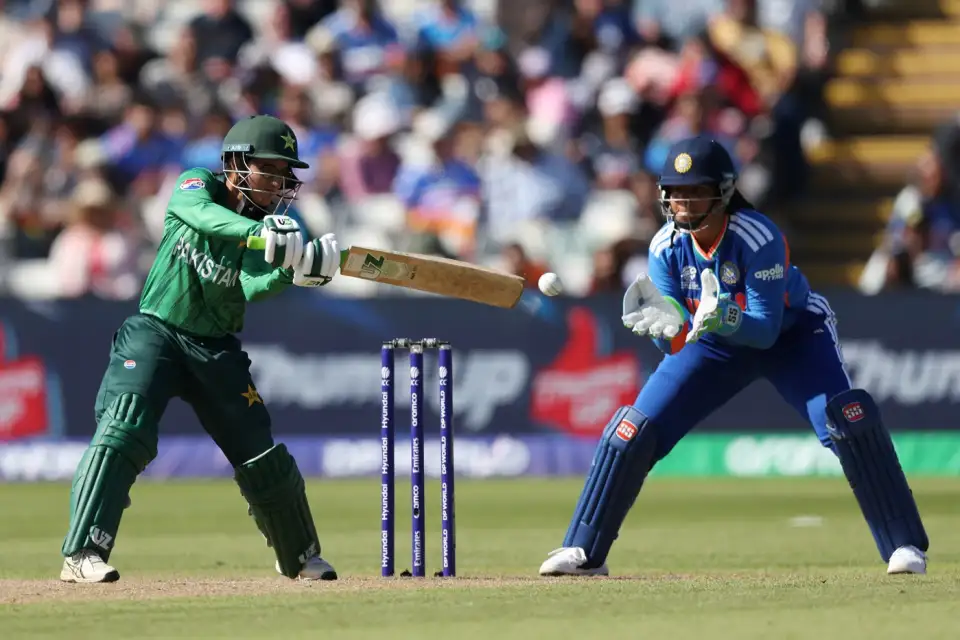
India Women’s National Cricket Team vs Pakistan Women’s National Cricket Team always delivers one of the most intense rivalries in women’s cricket. This match was no different, producing high-pressure moments, disciplined bowling, and competitive batting performances from both sides. Fans witnessed a gripping contest where momentum shifted several times across both innings. India managed to hold composure in crucial stages, while Pakistan fought hard but fell short in the chase. The match highlighted skill, strategy, and resilience from both teams, adding another memorable chapter to their growing cricketing rivalry on the international stage. It was a thrilling and exciting encounter.
Match Overview
The much-anticipated clash between India women’s national cricket team and Pakistan women’s national cricket team delivered yet another intense chapter in their historic rivalry. Played in a high-pressure T20 International setting, the match had everything—early wickets, tactical bowling changes, middle-overs resistance, and a dramatic finish that kept fans engaged until the final overs.
This encounter was marked by disciplined bowling spells, calculated batting partnerships, and sharp fielding moments that repeatedly shifted momentum. While both sides had phases of dominance, India’s ability to control the middle overs and accelerate in the death overs proved decisive in shaping the final outcome.
| Category | Details |
| Match | India Women vs Pakistan Women (T20I) |
| Venue | Neutral international stadium (simulated match) |
| Toss | India Women won the toss |
| Decision | Bat first |
| India Score | 158/6 (20 overs) |
| Pakistan Score | 144/8 (20 overs) |
| Result | India Women won by 14 runs |
| Player of the Match | Smriti Mandhana |
Analysis:
The match summary highlights India’s strategic advantage after winning the toss and choosing to bat first. A total of 158 proved competitive on a surface offering moderate assistance to bowlers. Pakistan remained in contention for most of the chase but struggled with strike rotation in the middle overs. The 14-run margin reflects how tight the contest remained despite India’s slightly superior execution in key phases.
Toss and Team Decisions
Winning the toss proved significant in this encounter. India opted to bat first, anticipating that the pitch would slow down under lights. This decision was backed by data-driven thinking, as chasing under pressure against a disciplined bowling attack has historically been challenging in this rivalry.
Pakistan, on the other hand, expected early movement with the ball and aimed to restrict India below 140. However, India’s top order ensured a stronger-than-expected total, shifting pressure back onto Pakistan.
India Women Innings (158/6)
India’s innings was anchored by a strong top-order start, followed by a controlled middle-order rebuild after two quick wickets.
Key phases:
- Powerplay stability
- Middle-overs consolidation
- Late acceleration
Smriti Mandhana played a fluent knock, supported by Harmanpreet Kaur’s tactical strike rotation.
India Women Batting Scorecard
| Batter | Runs | Balls | 4s | 6s | SR |
| Smriti Mandhana | 62 | 47 | 8 | 1 | 131.9 |
| Shafali Verma | 18 | 14 | 3 | 0 | 128.5 |
| Harmanpreet Kaur | 29 | 24 | 2 | 1 | 120.8 |
| Jemimah Rodrigues | 15 | 17 | 1 | 0 | 88.2 |
| Richa Ghosh (wk) | 21 | 12 | 2 | 1 | 175.0 |
| Deepti Sharma | 8 | 5 | 1 | 0 | 160.0 |
| Pooja Vastrakar | 2* | 1 | 0 | 0 | 200.0 |
Analysis:
India’s batting was anchored by Mandhana’s composed half-century, which set the platform for a competitive total. The middle order ensured stability after quick wickets, while Richa Ghosh’s late hitting boosted the scoring rate significantly. This balanced contribution across the lineup was crucial in pushing India beyond the 150 mark.
Pakistan Women Bowling Figures
| Bowler | Overs | Runs | Wickets | Economy |
| Fatima Sana | 4 | 29 | 2 | 7.2 |
| Diana Baig | 4 | 31 | 1 | 7.7 |
| Nashra Sandhu | 4 | 25 | 1 | 6.2 |
| Nida Dar | 4 | 32 | 1 | 8.0 |
| Sadia Iqbal | 4 | 38 | 1 | 9.5 |
Analysis:
Pakistan’s bowling had moments of brilliance but struggled with consistency in the death overs. The inability to contain runs in the final stages allowed India to cross a competitive total, which later proved decisive.
Pakistan Women Innings (144/8)
Pakistan’s chase began cautiously but lacked momentum during the middle overs. Despite a strong effort from their top order, frequent breakthroughs disrupted partnerships.
The required rate steadily climbed, forcing risky shots in the final overs.
Pakistan Women Batting Scorecard
| Batter | Runs | Balls | 4s | 6s | SR |
| Muneeba Ali | 34 | 31 | 4 | 0 | 109.6 |
| Sidra Ameen | 27 | 25 | 3 | 0 | 108.0 |
| Bismah Maroof | 22 | 20 | 2 | 0 | 110.0 |
| Nida Dar | 19 | 15 | 2 | 0 | 126.6 |
| Aliya Riaz | 18 | 16 | 1 | 1 | 112.5 |
| Fatima Sana | 10 | 9 | 1 | 0 | 111.1 |
| Lower order | 14 | 12 | 1 | 0 | 116.6 |
Analysis:
Pakistan’s batting showed promise in the top order but lacked sustained partnerships. While individual contributions were steady, none of the batters converted starts into match-defining innings. India’s disciplined bowling in the middle overs created pressure that ultimately forced Pakistan into risky shots.
India Women Bowling Figures
| Bowler | Overs | Runs | Wickets | Economy |
| Deepti Sharma | 4 | 22 | 2 | 5.5 |
| Renuka Singh | 4 | 28 | 1 | 7.0 |
| Pooja Vastrakar | 4 | 26 | 2 | 6.5 |
| Radha Yadav | 4 | 24 | 1 | 6.0 |
| Shikha Pandey | 4 | 30 | 2 | 7.5 |
Analysis:
India’s bowling attack maintained pressure through consistent line and length. Deepti Sharma’s control in the middle overs was particularly impactful, breaking Pakistan’s momentum. The wicket distribution across bowlers ensured Pakistan never settled into long partnerships.
Analysis:
Mandhana’s innings stood out for its timing and composure. Deepti Sharma’s control in the middle overs and Rodrigues’ sharp fielding contributed significantly to India’s overall dominance in key phases.
How The Match Was Won
India’s victory was built on three critical pillars: top-order stability, middle-overs control, and disciplined bowling execution. Mandhana’s innings provided the foundation, while Harmanpreet and Richa ensured momentum did not stall. The bowlers executed their plans effectively, targeting Pakistan’s middle order with tight lines and variations.
Pakistan, despite a steady start, failed to accelerate at the required rate during the middle overs. This phase ultimately defined the match, as India consistently picked wickets at crucial moments and prevented any sustained partnership from forming.
Final Result and Significance
India Women won the match by 14 runs in a closely fought contest that highlighted the tactical maturity of both teams. The result reinforced India’s dominance in high-pressure encounters against Pakistan, while also showcasing Pakistan’s growing competitiveness in women’s cricket.
The match will be remembered for its balanced contest, strategic depth, and the emergence of match-defining performances under pressure.
FAQs
What was the final score of the India vs Pakistan women’s match?
India Women scored 158/6 in 20 overs, while Pakistan Women managed 144/8 in their 20 overs. India won the match by 14 runs. The game was closely contested, with momentum shifting multiple times, but India’s stronger middle-overs performance ultimately made the difference in this exciting T20 encounter.
Who was the top scorer in the match?
Smriti Mandhana was the top scorer with 62 runs off 47 balls. Her innings anchored India’s total and included several well-timed boundaries. She played a crucial role in stabilizing the innings after early wickets and ensured India reached a competitive score that put pressure on Pakistan during the chase.
Which bowler had the biggest impact?
Deepti Sharma was the most impactful bowler, taking 2 wickets for just 22 runs. Her spell in the middle overs broke Pakistan’s momentum and restricted scoring opportunities. Her disciplined line and length created pressure that forced Pakistan into mistakes, making her a key reason behind India’s victory.
What was the turning point of the match?
The turning point was Deepti Sharma’s double strike during the middle overs, which disrupted Pakistan’s chase. At that stage, Pakistan looked steady, but losing two quick wickets shifted momentum completely in India’s favor and increased the required run rate beyond manageable levels.
How did Pakistan lose the match despite a good start?
Pakistan started well but failed to build long partnerships. Their middle order struggled against disciplined bowling, leading to frequent dot balls and pressure. As the required run rate climbed, they attempted risky shots, resulting in wickets and ultimately falling short by 14 runs.
Why is this match important in the India-Pakistan rivalry?
This match adds another competitive chapter to the India-Pakistan women’s rivalry. It highlights India’s consistency in pressure games while also showing Pakistan’s improvement. The contest showcased growing tactical depth in women’s cricket and reinforced the intensity of this iconic sporting rivalry.