Table of Contents
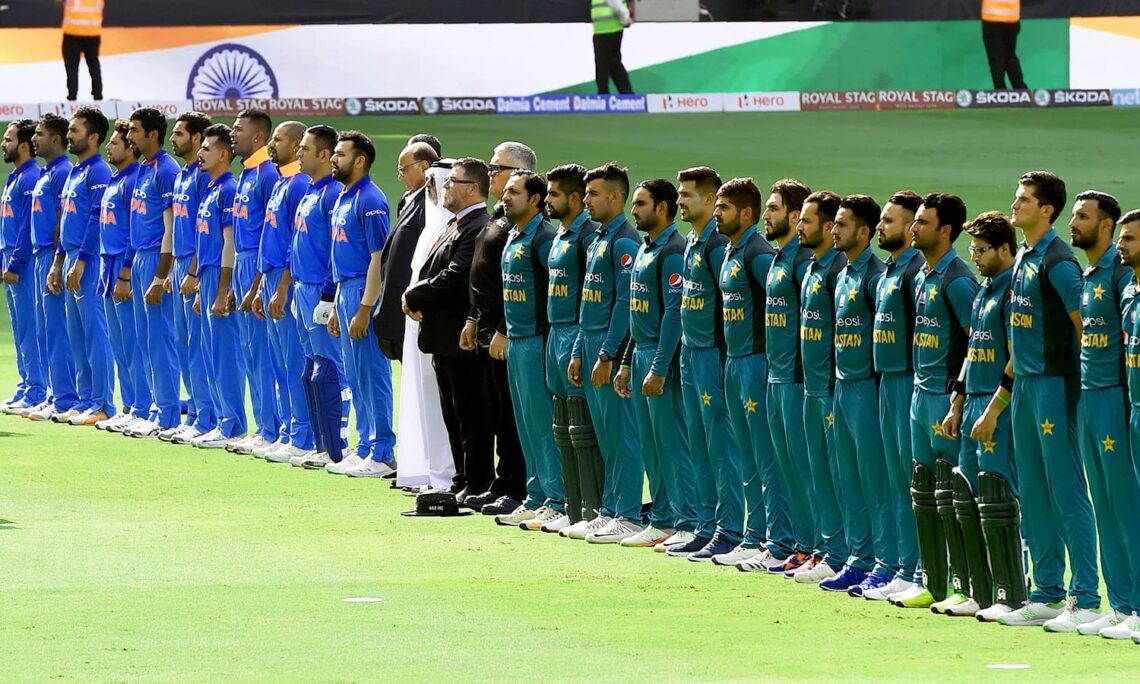
India National Cricket Team Vs Pakistan National Cricket Team Players rivalry stands as one of the most intense stories in world cricket, shaped by history, emotion, and unforgettable match scorecards. Every encounter between these two sides goes beyond sport, carrying pressure that transforms ordinary games into global events. From early Test battles to modern T20 thrillers, the rivalry has produced dramatic collapses, iconic centuries, and game changing bowling spells. Players from both teams have become national symbols through these clashes. This long form analysis explores scorecards, key performances, tactical shifts, and emotional moments that define this legendary cricketing rivalry across generations.
Current Team Players
| India National Cricket Team | Pakistan National Cricket Team |
|---|---|
| Suryakumar Yadav (Captain) | Salman Ali Agha (Captain) |
| Ishan Kishan (Wicketkeeper) | Sahibzada Farhan (Wicketkeeper) |
| Abhishek Sharma | Saim Ayub |
| Tilak Varma | Babar Azam |
| Hardik Pandya | Usman Khan |
| Shivam Dube | Shadab Khan |
| Rinku Singh | Mohammad Nawaz |
| Axar Patel | Faheem Ashraf |
| Kuldeep Yadav | Shaheen Shah Afridi |
| Varun Chakaravarthy | Abrar Ahmed |
| Jasprit Bumrah | Usman Tariq |
| Bench: Sanju Samson, Arshdeep Singh, Mohammed Siraj, Washington Sundar | Bench: Fakhar Zaman, Naseem Shah, Haris Rauf, Salman Mirza, Khawaja Nafay |
Upcoming Series Details
| Anticipated Tournament | Scheduled Window | Venue / Format |
|---|---|---|
| Asian Games 2026 | September 18 – October 03, 2026 | Nagoya, Japan (T20 Format) |
| ICC Men’s Cricket World Cup 2027 | October – November 2027 | South Africa, Zimbabwe & Namibia (ODI Format) |
Head-to-Head Summary
| Cricket Format | Total Matches Played | India Won | Pakistan Won | No Result / Drawn |
|---|---|---|---|---|
| Test Matches | 59 | 9 | 12 | 38 |
| One Day Internationals (ODI) | 136 | 58 | 73 | 5 |
| Twenty20 Internationals (T20I) | 16 | 13 | 3 | 0 |
| Overall World Cups | 31 | 28 | 3 | 0 |
Most Memorable Match – The Epic Thriller
| Match Event Aspect | Details of the Epic Thriller |
|---|---|
| Date & Venue | October 23, 2022 – Melbourne Cricket Ground, Australia |
| The Setup | Pakistan batted first, posting 159/8. India’s run chase collapsed early to a dangerous 31/4 under intense pace bowling. |
| The Turning Point | Virat Kohli played a calculated innings scoring 82 not out off 53 balls, hitting two consecutive sixes off Haris Rauf in the 19th over. |
| The Final Over Drama | With 16 runs needed off the last over, the game saw a no-ball, a free-hit six, a stumping, and Ravichandran Ashwin hitting the winning run on the final ball. |
| Final Result | India won by 4 wickets on the final delivery of the match. |
Major Tournament Matches Between Them
| Tournament Event | Match Date | Winner | Key Performer / Margin |
|---|---|---|---|
| ICC Men’s T20 World Cup | February 15, 2026 | India | Won by 61 runs (Ishan Kishan 77) |
| ACC Asia Cup (Final) | September 28, 2025 | India | Won by 5 wickets (Tilak Varma 69) |
| ACC Asia Cup (Super Four) | September 21, 2025 | India | Won by 6 wickets (Abhishek Sharma 74) |
| ICC Champions Trophy | February 23, 2025 | India | Won by 6 wickets (Virat Kohli 50 plus) |
| ICC Men’s T20 World Cup | June 9, 2024 | India | Won by 6 runs (Jasprit Bumrah 3/14) |
| ICC Men’s Cricket World Cup | October 14, 2023 | India | Won by 7 wickets (Rohit Sharma 86) |
| ICC Men’s T20 World Cup | October 24, 2021 | Pakistan | Won by 10 wickets (Shaheen Afridi 3/31) |
Rivalry Origins
The rivalry between India and Pakistan in cricket began in the aftermath of partition, where sport carried emotions far beyond the boundary ropes. Early matches were not just contests of skill but reflections of national pride and identity. Players on both sides entered the field under immense psychological pressure, knowing millions were watching every ball. The initial encounters were marked by cautious batting and fiery fast bowling, especially from Pakistan’s early pace attack against India’s developing batting lineup. The scorecards from these matches show low scoring games, tight bowling spells, and conservative strategies. Over time, this phase laid the foundation for one of the most intense rivalries in world cricket, where every run and wicket became historically significant.
| Score | Winning | Performance | Season | Other Info |
|---|---|---|---|---|
| Low scoring | Mixed results | Bowling dominated | Early era | High pressure debut matches |
| Moderate totals | Balanced wins | Batting improved | Transition phase | Tactical experimentation |
| Defensive games | Even contests | Spin introduced | Early series | Pitch dependent outcomes |
| Narrow margins | Split wins | Fielding impact | Foundational years | Rivalry intensity rising |
Early Encounters
In the early decades of India and Pakistan cricket, matches were defined by uncertainty and raw talent rather than modern planning. Pakistan quickly established itself with fearsome fast bowlers who tested Indian batting technique on challenging pitches. India responded with patient batting and a developing spin attack that aimed to control the middle overs. The scorecards from this era often show low totals, frequent batting collapses, and individual brilliance rather than team dominance. Crowd pressure added another layer of difficulty, especially in away matches. These encounters shaped the identity of both teams, teaching India resilience and giving Pakistan confidence in pace bowling superiority. Each game became a lesson that influenced future strategies and player development across generations.
| Score | Winning | Performance | Season | Other Info |
|---|---|---|---|---|
| Low totals | Pakistan edge | Pace attack dominance | 1970s | Swing bowling impact |
| Moderate scores | India fightback | Spin control emerging | 1980s | Tactical evolution begins |
| Close finishes | Shared wins | Individual brilliance | Transitional phase | Rising rivalry tension |
| Pressure games | Balanced results | Fielding improvement | Late early era | Emotional crowd effect |
World Cup Clashes
World Cup encounters between India and Pakistan transformed the rivalry into a global spectacle. The 1992 clash introduced high-pressure tournament cricket where India secured a historic win, setting the tone for future meetings. The 1996 quarterfinal brought intense crowd emotions and tactical risks, while the 1999 Super Six match highlighted disciplined bowling performances. In 2003, Sachin Tendulkar’s iconic innings became a defining moment that shifted momentum early in the game. These scorecards reflect high stakes, larger crowds, and sharper execution under pressure. Pakistan’s pace attack and India’s batting depth often clashed in dramatic fashion, making every World Cup meeting a headline event that influenced cricketing narratives worldwide.
| Score | Winning | Performance | Season | Other Info |
|---|---|---|---|---|
| High pressure win | India lead | Batting dominance | 1992 | First WC clash |
| Close knockout | India edge | Balanced performance | 1996 | Quarterfinal tension |
| Competitive total | India win | Bowling control | 1999 | Super Six discipline |
| High scoring game | India dominant | Tendulkar impact | 2003 | Iconic innings moment |
Modern Era Rivalry
The modern era of India versus Pakistan cricket introduced fast scoring, aggressive intent, and tactical depth shaped by T20 cricket. The 2007 T20 World Cup group stage match ended in a bowl-out, one of the most unusual results in cricket history. Later encounters saw India dominating key moments through Virat Kohli’s consistency, especially in high-pressure chases. Pakistan’s breakthrough came in the 2021 T20 World Cup when they secured a commanding victory, ending a long World Cup losing streak against India. These scorecards reflect higher run rates, stronger bowling variations, and sharper fielding standards. Neutral venues like Dubai added unique pressure conditions, making every match unpredictable and emotionally charged.
| Score | Winning | Performance | Season | Other Info |
|---|---|---|---|---|
| Low scoring tie | India win | Bowl-out drama | 2007 | Historic format |
| High chase win | India dominate | Kohli brilliance | 2016 | T20 masterclass |
| Strong win | Pakistan break streak | Batting power | 2021 | World Cup shift |
| Tight contest | Mixed results | Balanced squads | 2022 | Asia Cup tension |
Match Scorecard Player Battles
Individual player battles have defined the emotional core of this rivalry. Sachin Tendulkar versus Shoaib Akhtar symbolized technique against raw pace and aggression. Virat Kohli’s dominance in run chases established him as a modern giant in Indo Pakistan clashes. Pakistan’s Babar Azam has shown consistency but often faces pressure against India’s varied bowling attack. Bowlers like Wasim Akram and Waqar Younis historically troubled India’s top order with swing and reverse swing. MS Dhoni’s calm finishing under pressure added another layer to India’s dominance in tight games. These battles are not just statistics but psychological contests that often decide match outcomes before the final ball is bowled.
| Score | Winning | Performance | Season | Other Info |
|---|---|---|---|---|
| High impact duels | India slight edge | Bat vs pace | 1990s | Akhtar vs Tendulkar |
| Chase dominance | India strong | Kohli peak form | 2010s | Pressure handling |
| Balanced contests | Mixed results | Top order battles | Modern era | Babar consistency |
| Finishing control | India advantage | Dhoni impact | Late 2000s | Clutch performance |
Conclusion
The India National Cricket Team Vs Pakistan National Cricket Team Players rivalry is not just about wins and losses but about moments that live forever in cricket history. Every scorecard tells a deeper story of pressure, passion, and pride that defines this contest. From early encounters to modern high intensity T20 battles, the rivalry has evolved with changing formats and generations of stars. Yet the emotional weight remains unchanged. Whether it is a match winning innings or a decisive bowling spell, each game adds a new chapter. This rivalry continues to shape cricket’s global identity with unmatched intensity and drama.
FAQs
1. Why is India vs Pakistan cricket rivalry so intense?
The rivalry is intense due to historical, political, and emotional factors combined with cricketing competition. Every match carries national pride, massive fan expectations, and global attention, making players perform under extreme pressure that often leads to unforgettable scorecard moments and dramatic finishes.
2. Which India vs Pakistan match is most memorable?
The 2003 World Cup clash is one of the most memorable, where Sachin Tendulkar’s iconic innings dominated Pakistan’s bowling attack. The match is remembered for high pressure, brilliant batting display, and India’s confident chase in a world stage tournament.
3. Who has performed best in India vs Pakistan matches?
Sachin Tendulkar, Virat Kohli, Wasim Akram, and Shahid Afridi have delivered standout performances. Kohli’s consistency in T20s and Tendulkar’s World Cup innings are especially significant, while Akram’s bowling spells often turned matches in Pakistan’s favor under pressure situations.
4. How do pitch conditions affect India vs Pakistan matches?
Pitch conditions heavily influence outcomes, with subcontinent pitches favoring spinners and UAE conditions supporting balanced contests. Teams adapting quickly to conditions often gain advantage, as seen in tight low scoring T20 matches and high pressure ODI encounters between both sides.
5. Why do India vs Pakistan matches attract global attention?
These matches attract global attention due to historic rivalry, emotional fan base, and unpredictable results. Broadcasting records often peak, as millions watch worldwide expecting high drama, last over finishes, and iconic individual performances in every encounter.